
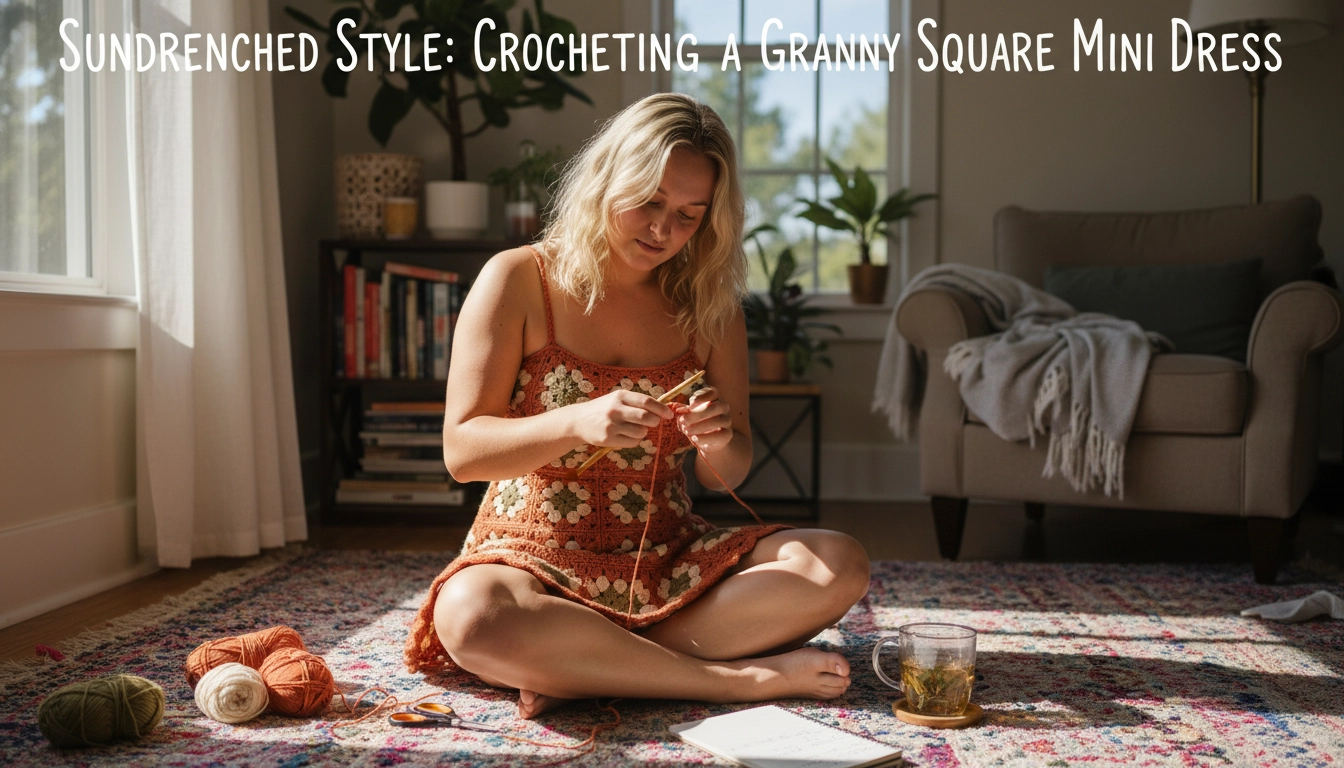
Stop wearing plastic. Seriously, walk into any high-street store right now and you are basically buying woven oil slicks that melt under the summer sun and smell weird after twenty minutes. I saw a mass-produced rack recently and felt pure disgust—why let machines knit our lives into landfill fodder? We can hack the system using basic geometry and a hook. I took a similar stance against fast-fashion synthetic wear when designing my Boho Beauty: How to Crochet a Granny Square Lace-Up Bandeau Top which relies on geometric modular design to hold its shape. We are building a high-impact, contoured block piece using organic cotton that obeys actual physics, not a sweatshop profit margin. Math, but wearable art.
Creating your own clothes is a design revolution. You are the factory now. Let us build this from the ground up.
Understanding the Basics of Modern Granny Square Construction
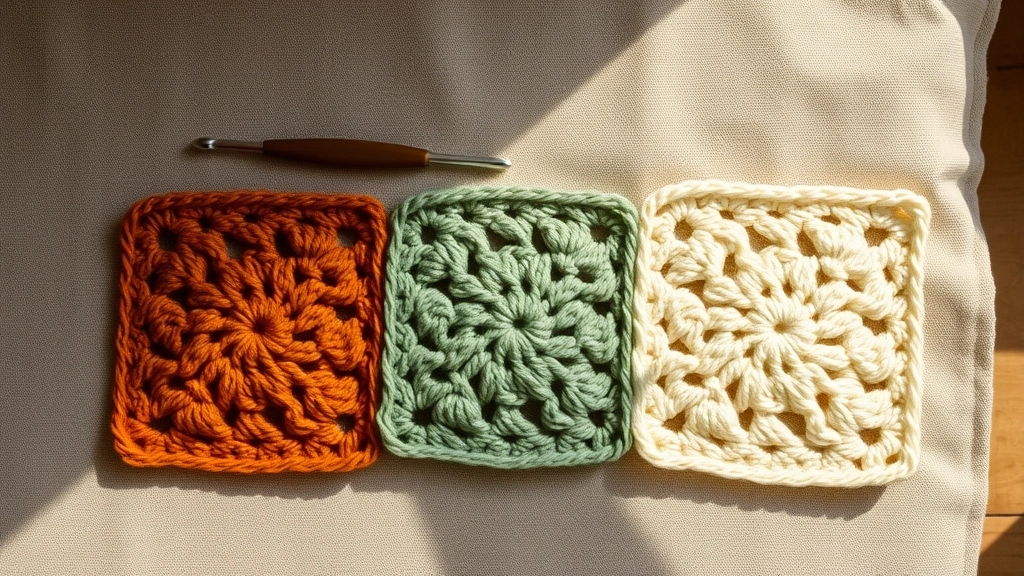
Slight adjustments in your crochet hook size can scale your granny squares perfectly without changing your stitch counts.
To get a fit that actually hugs your curves, treat your crochet like architectural tiles. We are doing modular math here.
Think of each block as a pixel. If you change your hook size by just half a millimeter, you change the scale of the entire grid.
This is how we customize the fit without rewriting the stitch math. This modular approach is highly versatile; for instance, you can apply these same layout principles to my Garden Party Ready: Crocheting an Earth-Tone Granny Square Romper for a completely different silhouette.
No weird sagging. Just solid tension.
If you are trying to map this out for your own body, do not guess. Here is a quick breakdown of how changing your hook size scales the entire grid without making you redo all your math.
| Target Dress Size | Recommended Hook Size | Resulting Square Width |
|---|---|---|
| Extra Small to Small | 3.0 mm | 3.5 inches |
| Medium | 3.5 mm | 4.0 inches |
| Large to Extra Large | 4.0 mm | 4.5 inches |
My Take
Always crochet a swatch square first. If your square is too small, do not change your stitches, just jump up a hook size. It is the easiest shortcut in the book.
The Math of Fit
Measure your bust and divide by the number of squares needed to wrap around. Adjusting your hook size by half a millimeter scales your squares without altering the pattern.
Overview: Bold Terracotta Colorway — A Warm-Weather Statement Piece
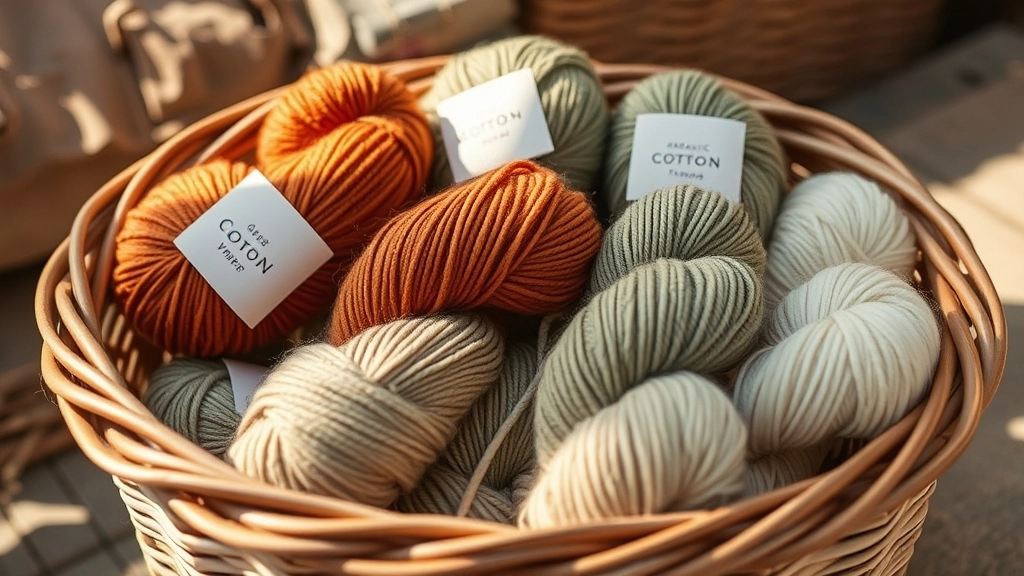
A Mediterranean-inspired colorway of terracotta, sage green, and cream brings warmth and structure to the dress.
Color dictates how the eye moves. Period. I was mapping out this colorway with my associate Dolores Freeman, who wanted something that felt like a dusty Mediterranean afternoon but with actual structural integrity. She lives in Port Macquarie, where the sun bakes everything and synthetic yarn suffocates you.
A rich terracotta base, cool sage, and neutral cream. Terracotta acts as our framework, binding the floral centers. Plant-dyed cotton won't bleach in the sun.
To get the color balance exactly right, you need to budget your yarn skeins. Here is the visual breakdown of how much each color dominates the overall design.
My Take
Buy an extra skein of Terracotta. It is the main border and joining color, so you will use it way faster than the sage or cream.
Granny Square Anatomy: Three-Petal Flower Center in Sage and Cream
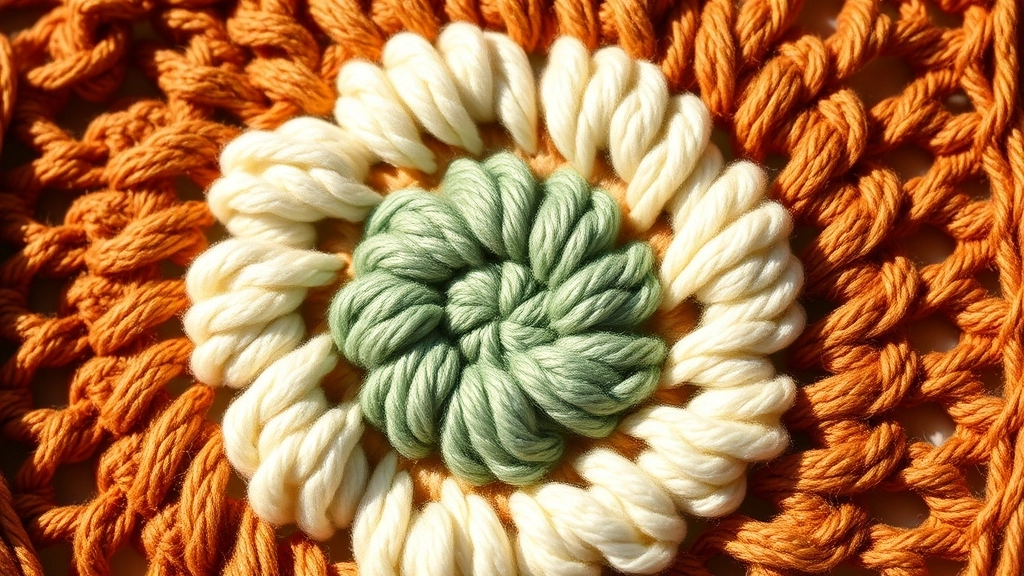
The anatomy of a single square: starting with a sage green core, cream petals, and a sharp terracotta frame.
Each block starts with a tight, high-contrast core. We want that sage green to pop.
Start with a magic ring. Pull it tight.
Stack cream petals on top using puff stitches to create three-dimensional depth.
The terracotta border then snaps that circular flower into a sharp ninety-degree square. Math clicks.
Sometimes your squares do not look like neat little pixels. Here is a troubleshooting guide to help you fix wonky shapes before you assemble the dress.
| Shape Issue | Root Cause | Quick Solution |
|---|---|---|
| Square is curling like a bowl | Tension is too tight or stitches are missing | Relax your hands and count your corner double crochets |
| Flower center is bulging out | Magic ring was not pulled tight enough | Pull the tail firmly and secure it with a knot |
| Corners look rounded, not sharp | Forgot the chain spaces in the corners | Ensure you work two chains between the stitch clusters |
My Take
Blocking your squares before joining them is not optional here. Wet block them to make those ninety-degree corners perfectly sharp.
Dress Silhouette: Fitted Bodice, Natural Waist, and Full Flared Skirt
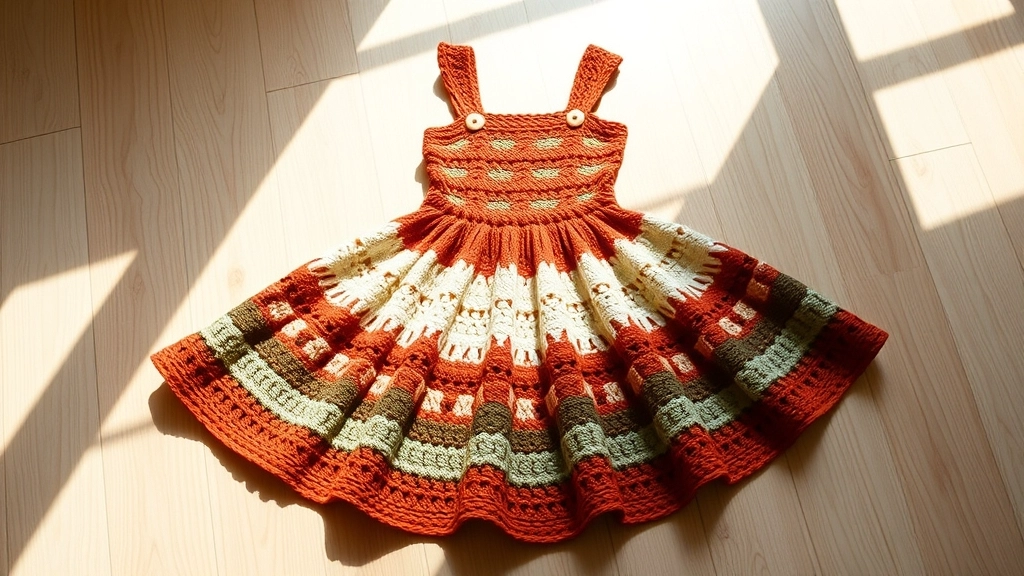
The clever layout of granny squares creates a naturally fitted bodice that flows into a beautifully flared skirt.
This silhouette highlights your waist without using annoying, complex math. Achieving a custom, body-hugging shape is also the main focus of my fitted crochet pants pattern where proper stitch architecture prevents the fabric from sagging. It is all about how you lay out the grid.
The bodice is a tight, flat slip-stitched layout that fits close.
For the skirt, we run a rapid-fire increase round below the waist squares.
Double the stitches, and the cotton falls into a heavy drape that flares out when you walk.
Hem & Edge Finish: Crocheting the Scalloped Shell-Stitch Border in Terracotta
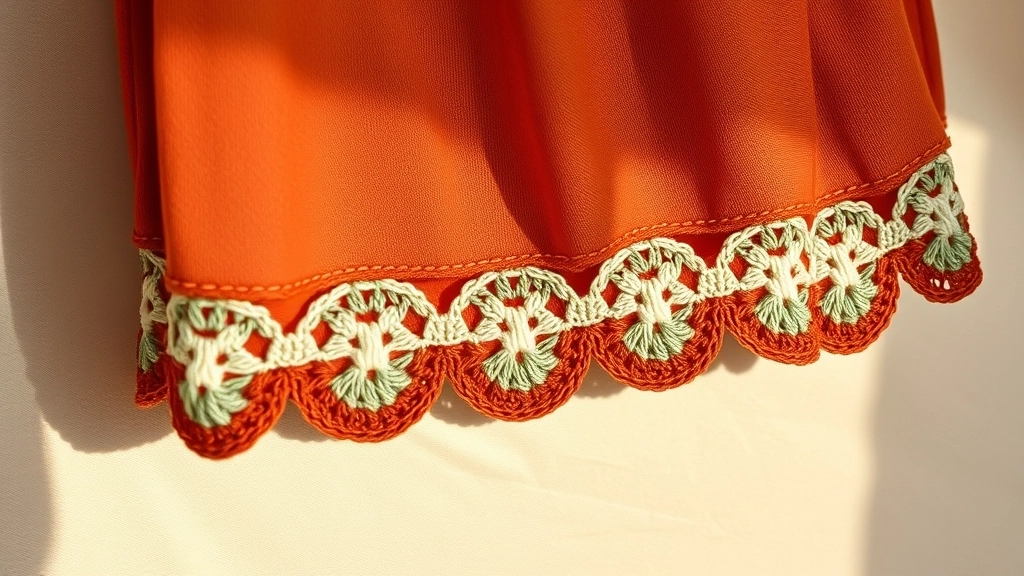
The scalloped shell-stitch hem adds weight and a beautiful wavy finish, preventing the cotton fabric from rolling up.
The hem needs weight. If you leave a crochet hem raw, it rolls up. It looks cheap.
So we finish this with a chunky, scalloped shell-stitch border. If you love this classic, feminine edge, you can also see how I applied a similar finish to my Summer Romance: Crocheting a Navy Granny Square Mini Dress with Scalloped Hem project.
By forcing multiple double crochets into a single stitch, we create these heavy, rolling waves of yarn that pull the skirt down.
Tension Control
Keep your tension consistent during the scalloped border. If your shells are too tight, the hem will curl inward; if too loose, the edge will look wavy.
Pattern Tutorial: Sundrenched Style: Crocheting a Terracotta Granny Square Mini Dress
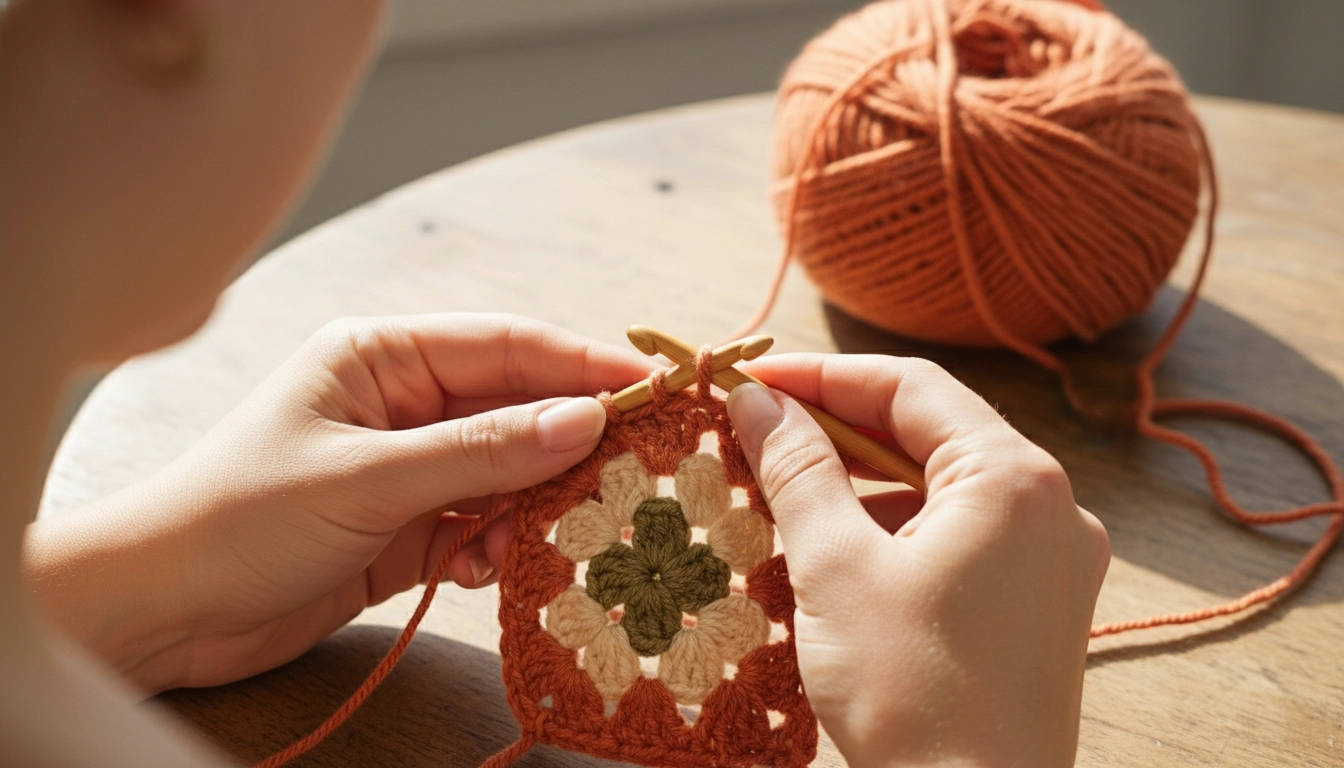
Follow the pattern to construct your own custom granny square motifs step-by-step.
This pattern is for those comfortable with basic stitches. No beginner hand-holding here, just clean, geometric construction.
Skill Level: Intermediate
Materials:
1. 100 percent Organic Cotton Yarn (Sport weight; Terracotta, Sage Green, Cream)
2. 3.5 mm Crochet Hook
3. Tapestry needle and scissors
Yarn Recommendations: Best Cotton Yarns for a Structured, Vibrant Finish
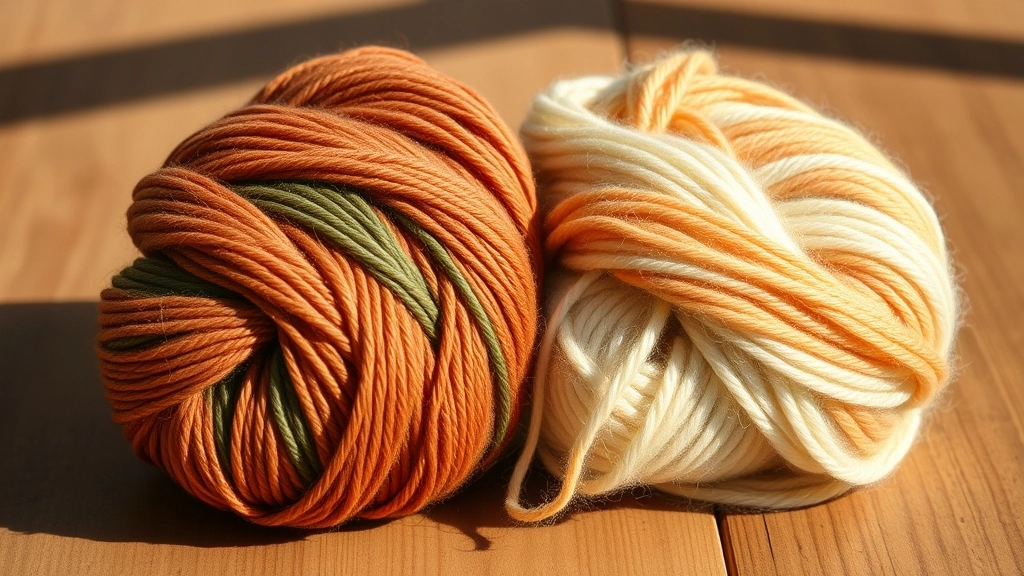
Choosing high-quality organic cotton ensures your dress holds its shape and breathes under the summer sun.
Do not buy cheap acrylic. It is plastic. It stretches, holds sweat, and turns your dress into a sad, saggy sack after one wash.
Organic cotton is the only way to go.
It has incredible stitch definition, and cotton has the perfect physical weight to pull the flared skirt downward so it hangs beautifully.
Mercerized cotton gives a subtle sheen that looks incredible under the sun.
Do not let cheap materials ruin your hard work. Let us compare how different fibers behave under real-world conditions so you can make the right choice.
| Fiber Type | Fabric Weight and Drape | Breathability under Sun | Longevity and Wash Wear |
|---|---|---|---|
| Organic Cotton | Heavy drape, holds shape | Highly breathable | Excellent, gets softer over time |
| Mercerized Cotton | Structured, glossy finish | Moderate breathability | Superior, resists pilling and fading |
| Acrylic Blend | Light, prone to sagging | Traps heat and sweat | Poor, stretches out permanently |
My Take
If you want maximum structure, go with mercerized cotton. If you want a softer, more casual feel, organic cotton is your best friend.
Avoid Acrylic
Acrylic yarn stretches permanently under its own weight, which will turn your fitted mini dress into a saggy tunic after one wash.
Conclusion
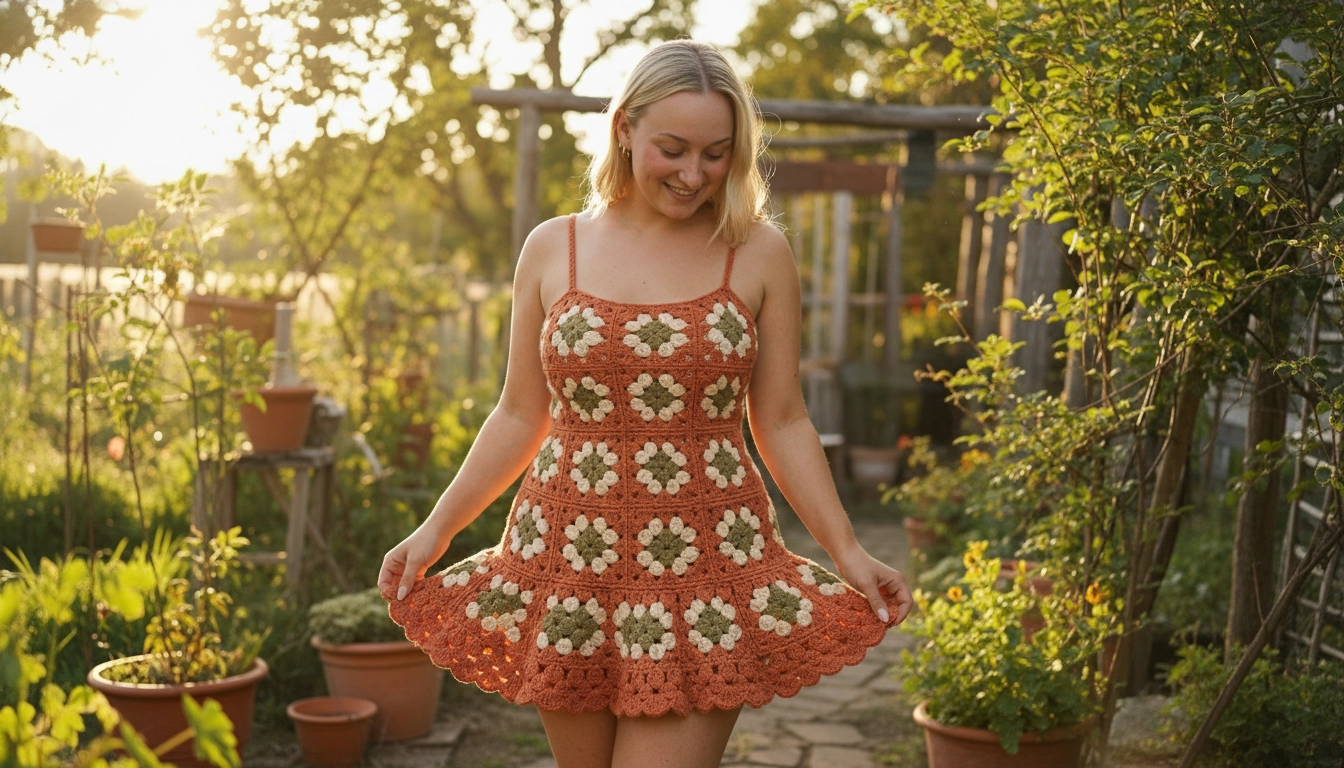
The completed dress: a beautiful, sustainable statement of absolute design independence.
Making your own clothes is the ultimate power move against the fast-fashion machine. You are wearing a statement of absolute design independence.
Take your time with the tension. Get the cotton. Build something that actually lasts.