
Let’s get real. If your fabric lacks mathematical integrity, your fit is trash. Square cuts? Literally so bulky. We ran into similar structural challenges when designing the Jewel Box Romper: Crocheting a Multicolor Granny Square One-Piece with Racerback, where we had to swap out cheap acrylics for fibers that actually hold their shape. They bunch up around your collarbones like a sad accordion because the geometry is fighting your body. Circular geometry, though? It distributes the weight perfectly across 360 degrees. That’s why we’re hacking the system with Mandala Magic: Crocheting a Full-Circle Mandala Poncho with Concentric Lace Rings.
Honestly, I was DMing with Lucas Pena over on Highfield Road last week because his latest circle was doing this weird, potato-chip wave. Circular fiber work is pure radial math. If your rate of increase doesn’t perfectly mirror the flat expansion rate, your tension is toast. This isn't some quick craft; it’s a masterclass in color-blocking and yarn physics.
Understanding the Basics of Circular Crochet
What actually is a circular mandala garment? It’s a 3D canvas spinning out from a single point. You aren't working back and forth. You’re building outward, using radial symmetry.
Every round requires a precise calculation. We mix dense stitch groups with open lace chains. This contrast lets the fabric breathe and prevents a heavy blanket feel. It gives you that effortless swish.
The Mandala Poncho: Wearable Fiber Art
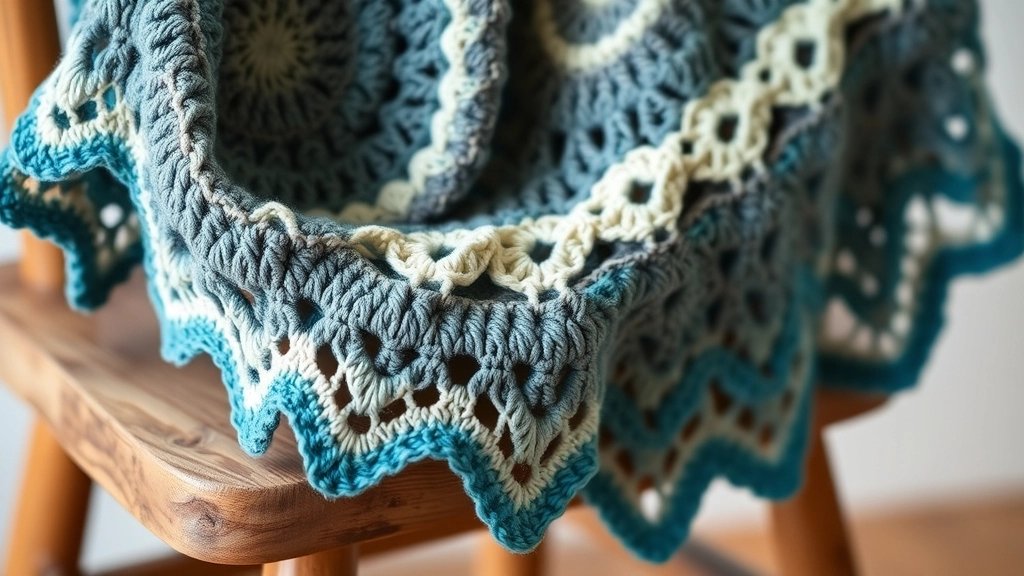
Natural fibers give the poncho an elegant, heavy drape that synthetic yarns just can't match.
Fast fashion wants us to buy cheap, static acrylic garbage that pills. If you want to see how these same principles of yarn physics apply to form-fitting bottoms, check out our guide on Earthy Stripes: Crocheting Multi-Tone Earth Stripe Booty Shorts with Scalloped Legs. But we want something that actually moves. Something with organic cotton that has real weight. This circular design is the ultimate rebellion.
Machines cannot replicate this. Every stitch represents a conscious choice and a rejection of mindless consumption.
The Math of Drape
Using natural fibers like organic cotton ensures that your circular project drapes beautifully under its own weight.
This is an intermediate project. The stitches are basic, yes. But keeping tension uniform when transitioning between clusters and loose chains? That takes focus.
Circular Construction and Radial Symmetry
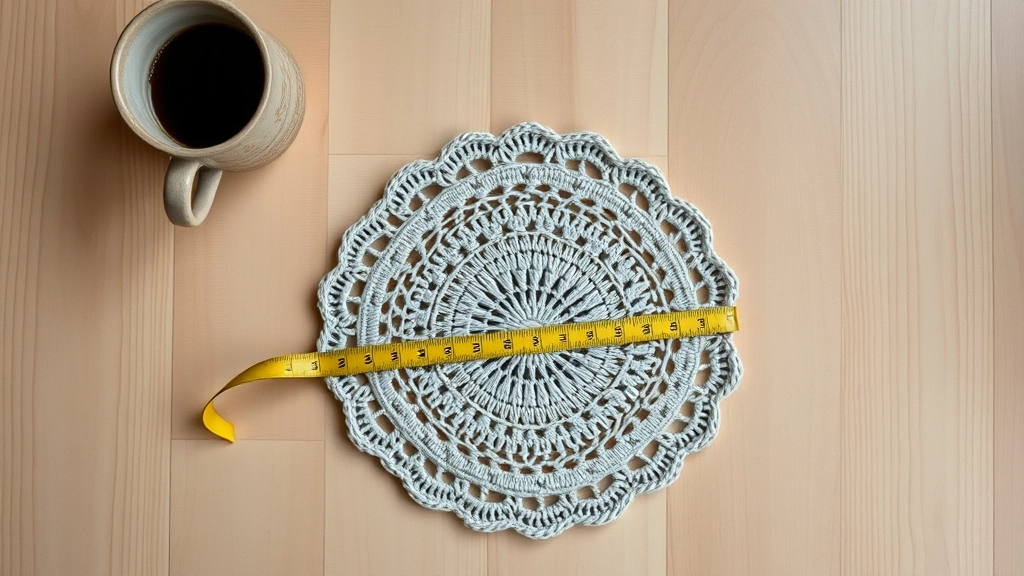
Keeping your circular crochet project perfectly flat is a satisfying exercise in math and tension.
Keeping a circle flat is all about the math of the radius. In double crochet, you usually add twelve stitches per round. But lace changes that formula.
We have to balance heavy stitch sections with airy chain loops. Too many stitches, and your edge ripples. Too few, and the fabric bowls upward. Watch those stitch counts.
I put together this quick troubleshooting guide to help you debug your circle geometry before you end up with a wavy mess.
| Edge Behavior | Root Cause | Quick Fix |
|---|---|---|
| Rippling and waving | Too many stitches or loose chains | Skip a few increases or tighten your tension |
| Cupping or bowling upward | Missing increases or tight stitches | Add an extra stitch or use a larger hook |
| Perfect flat drape | Correct radial math and relaxed hands | Keep doing exactly what you are doing |
My Take
If your circle starts looking like a bowl, do not panic. Just back up a round, relax your wrists, and let the hook do the heavy lifting. Tension is everything.
To help you visualize how this beast expands and contracts, here is the exact stitch trajectory from the center out to the edge.
My Take
Notice how the stitch counts dip on lace rounds? That is the secret sauce. The chains stretch further than solid stitches, which is why we drop the count to keep the circle flat.
Color Progression and Visual Depth
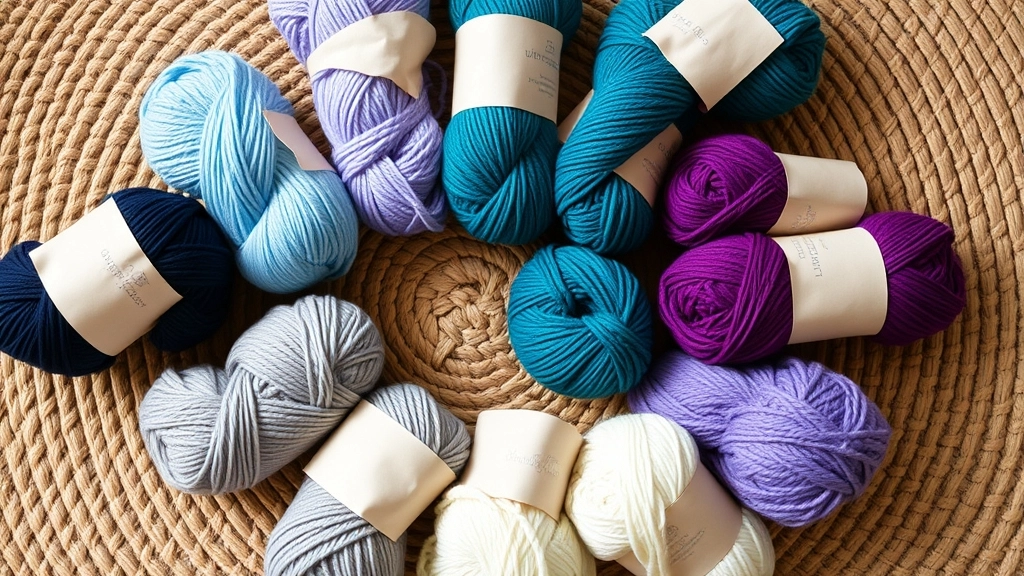
Choosing the right color progression creates an optical depth that draws the eye outward.
Let’s talk palette. We start in the dead center with navy. It’s heavy. It anchors everything. We used a similar deep navy base to anchor the dramatic drape of our Midnight Garden: Crocheting a Navy and Rose Granny Square Halter Maxi Dress with Side Slit.
Then we bleed into light blue, lavender, vibrant purple, deep teal, grey, and cream. This color-blocking draws the eye outward, creating insane optical depth.
Let me lay out the exact color map so you can see how these shades work together to create that optical illusion of depth.
| Color | Rounds | Visual Impact |
|---|---|---|
| Navy | Rounds One and Two | Heavy anchor point to draw the eye inward |
| Light Blue | Round Three | Soft transition to break up the dark center |
| Lavender | Round Four | Subtle warmth before the bright pop |
| Purple | Round Five | Vibrant highlight that commands attention |
| Teal | Rounds Six and Nine | Rich jewel tone for high-contrast framing |
| Grey | Round Seven | Cool neutral to balance the bright purple and teal |
| Cream | Rounds Eight and Ten | Bright outer frame to maximize the lace effect |
My Take
Color-blocking is not random. Starting with your darkest shade in the center creates a visual vortex that makes the whole poncho look three-dimensional.
Pattern: Mandala Magic: Crocheting a Full-Circle Mandala Poncho with Concentric Lace Rings
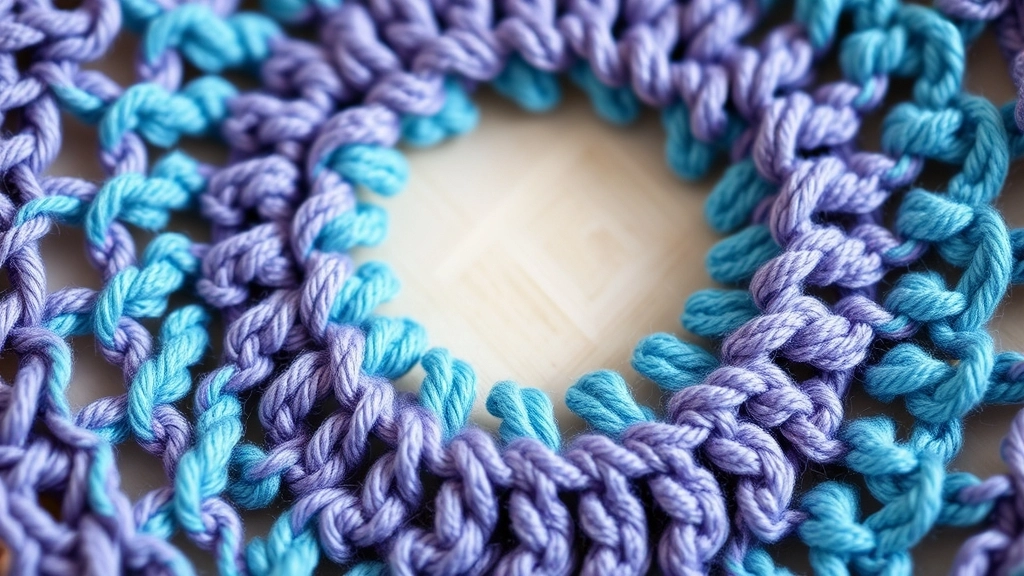
Transitioning between dense stitch groups and open lace chains creates the magic of this pattern.
Tension Check
Do not pull your chain stitches too tight in the lace rounds. If you do, the entire outer edge will cup inward, ruining the flat circle shape.
Wearing Styles and Versatility
The versatility is wild. If you love styling unique, airy layers, you can also experiment with pairing your pieces, much like we did in our guide on Boho Duo: Styling a Teal Lace Bralette with Bohemian Tapestry Wide-Leg Pants. Wear it with the central circle on your chest, letting the lace cascade down your arms like dramatic, flowing sleeves.
It pairs perfectly with worn-in denim. Or use it as a cover-up. You can even hang it on your wall. It’s literally art.
Conclusion
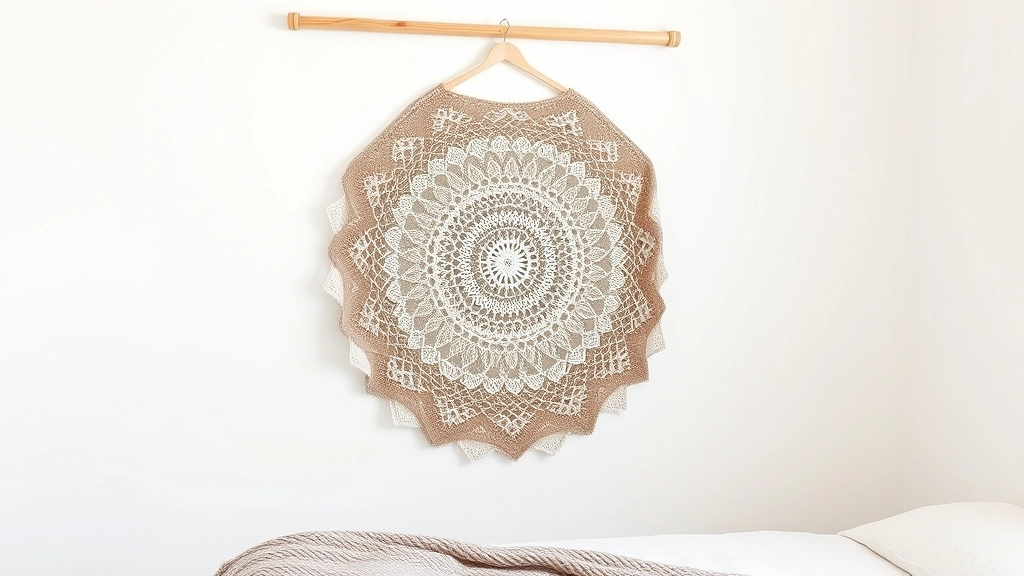
When you aren't wearing your mandala poncho, hang it up to serve as a stunning piece of handmade fiber art.
Leaning into circular geometry means refusing to settle for basic, machine-made clothing. When you master this pattern, you aren't just making a piece. You are learning how fibers behave under the laws of physics.
Get some organic cotton, grab your hook, and start. Your closet needs this.