
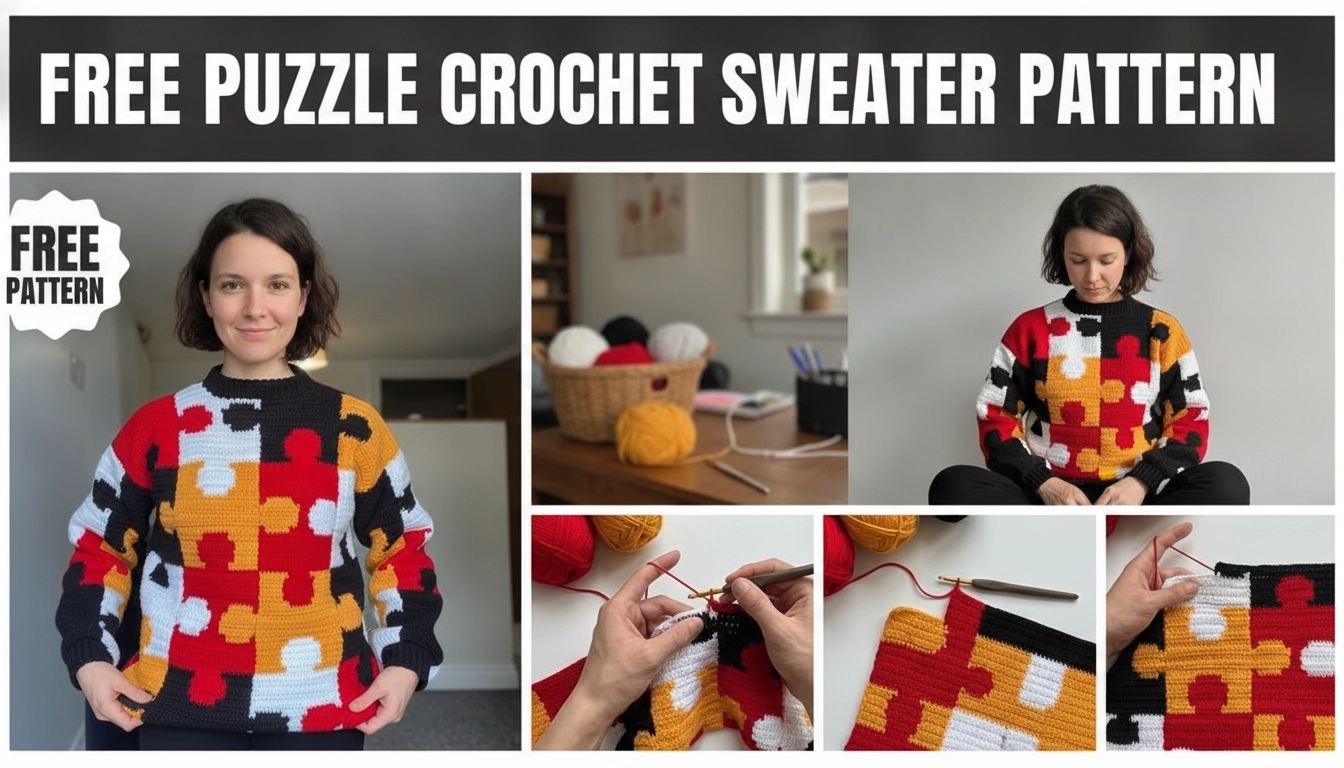
Walk into any fast-fashion store and you'll see a sea of identical, limp polyester sweaters designed to fall apart in three washes. It is incredibly depressing. Stitches have no soul without math behind them, just cheap machinery. Real style needs structure—organic cotton that holds its shape, or heavy wool that understands gravity. That is why this Free Puzzle Crochet Sweater Pattern exists. We are hacking a designer look by turning color placement into a hard math problem. This approach is very similar to how we map out color grids in the Free Crochet Anime Girl Sweater Pattern to create high-fidelity wearable art. Anna Armstrong hit me up asking how to get those razor-sharp geometric seams without bulky sew-lines. We figured it out. This is high-impact slow fashion that destroys anything you buy off a retail rack.
Why Choose a Free Puzzle Crochet Sweater Pattern?
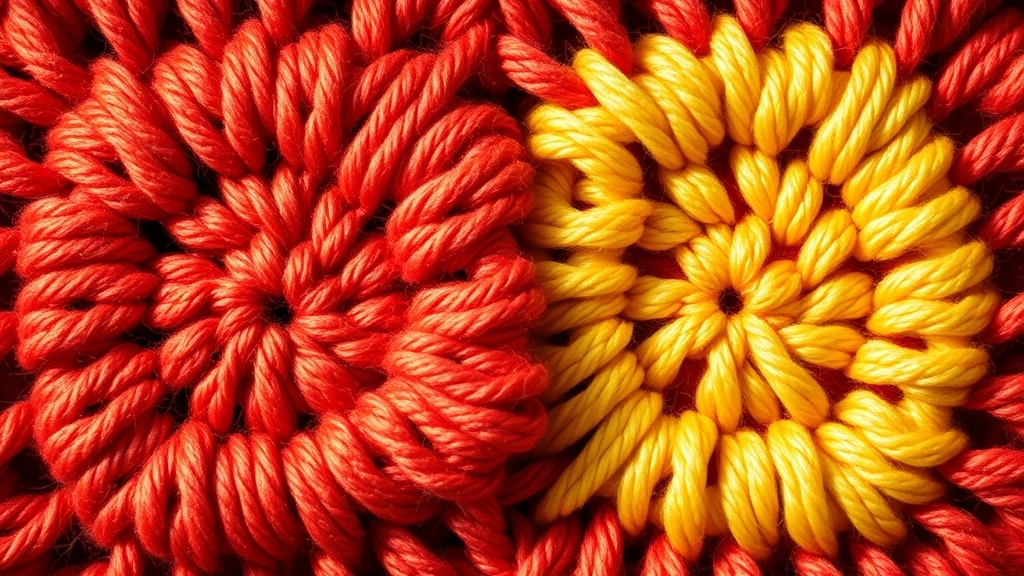
Intarsia colorwork creates a completely flat, uniform fabric without bulky join lines.
It is all about interlocking lines. Sew separate squares and the seams get bulky, sagging under their own weight. Constructing interlocking shapes with intarsia creates a single, unified fabric sheet. The color-blocking is baked right into the stitch math. Understanding this anatomical geometry of a stitch is key to making garments fit like a second skin, a concept we dive deep into with our Free Crochet Ruffle Skirt and Long Sleeve Crop Top Pattern.
To give you a visual on why intarsia wins, check out how the seam thickness stacks up when you use different construction methods.
My Take
Intarsia is the absolute king of flat color-blocking. It keeps the fabric at a uniform thickness so you do not get those awkward, stiff ridges running down your body.
Mastering the Color Changes
To get clean lines, change colors on the final pull-through of the previous stitch. If you want to expand your stitch repertoire, check out this Crochet Stitch Dictionary.
Required Materials: Best Yarn Colors and Tools
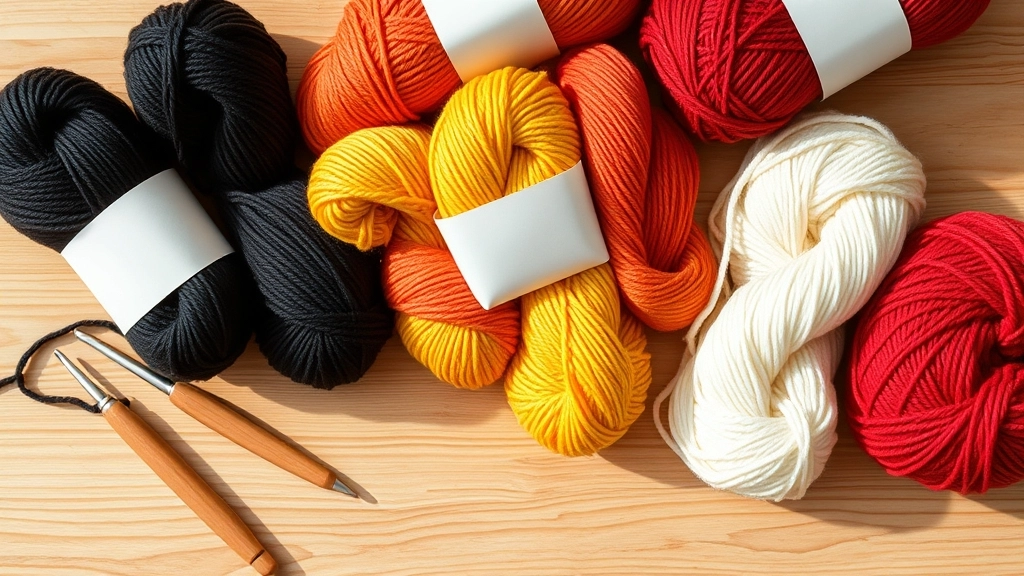
Choosing high-quality organic cotton or wool ensures your geometric shapes stay crisp and structured.
Cheap, stretchy yarn makes this look like a sad, melted puddle. Seriously. You need structured organic cotton or heavy natural wool. Cotton gives those incredibly sharp edge-lines that pop on a screen, while wool has the bounce to hold a structured fit. We used this exact strategy of matching premium fibers with geometric color blocking in our Patchwork Palette: Crocheting a Rust and Blue Colorblock Bralette and Wide-Leg Pants Set. Go with black, pure red, yellow-orange, and clean white.
Let us break down exactly why your fiber choice will make or break this project because nobody wants a floppy, sad-looking sweater.
| Fiber Material | Structural Integrity | Best For | Mary's Verdict |
|---|---|---|---|
| Organic Cotton | Extremely high with sharp stitch definition | Crisp summer wear and graphic color blocks | The absolute best for razor-sharp geometric lines |
| Heavy Wool | Excellent bounce and natural memory | Cozy winter sweaters with structured drape | Perfect if you want warmth without losing the shape |
| Cheap Acrylic | Low structural hold and stretches easily | Budget blankets or loose garments | Avoid it for this pattern unless you want a sad puddle |
My Take
Seriously, do not cheap out on acrylic for this design. It has zero memory and will stretch into a giant, shapeless sack after one wear. Stick to cotton or wool.
Recommended Resource
If you want to keep your hand tension perfectly even without hand fatigue, many makers prefer ergonomic handles like the ones in this MECHEER Crochet Hooks Set.
How to Read the Color Chart for Your Puzzle Sweater
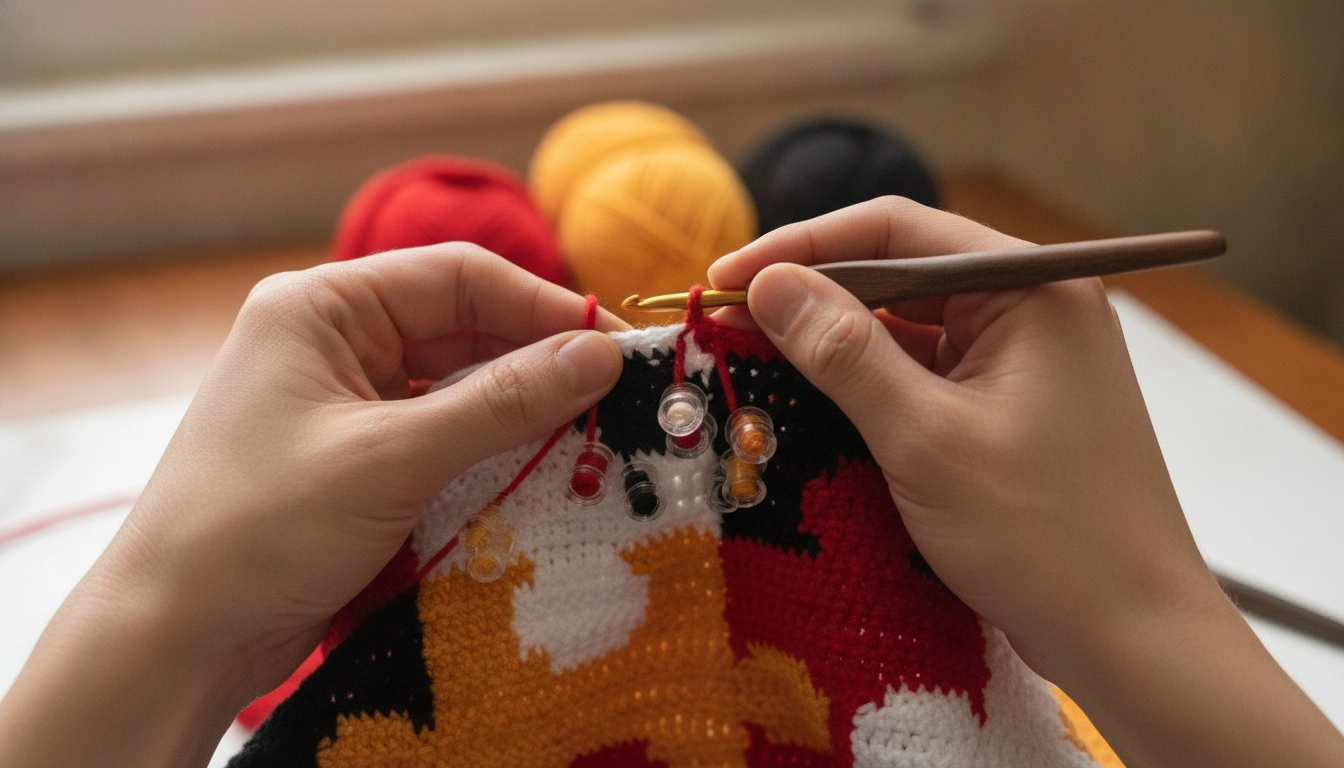
Using bobbins keeps your yarn organized and your color transitions crisp.
We are using intarsia. No carrying yarn inside the stitches. Carrying yarn is lazy and ruins the contrast—dark yarn always bleeds through the light. White sections should stay blindingly white. Use bobbins to keep things clean. Read right-to-left on right-side rows, and left-to-right on wrong-side rows. It's coordinate geometry. If you enjoy working with grid-based designs and color-block mathematics, you will also love the Free Luffy Skull Cardigan Crochet Pattern which uses similar structural layout techniques.
Colorwork can get messy real quick if you do not have a game plan, so here is a quick guide to keeping your tension and transitions flawless.
| Common Intarsia Mistake | Root Cause | Quick Fix |
|---|---|---|
| Puckering at color changes | Pulling the new yarn strand too tight | Leave a tiny bit of slack on the first stitch of the new color |
| Holes between color blocks | Not locking the yarns together | Twist the old and new yarn strands around each other on the wrong side |
| Massive yarn tangles | Rotating the project in the same direction | Alternate your turning direction clockwise and counter-clockwise |
My Take
The biggest mistake is pulling the new color too tight. Leave a tiny bit of slack on the color change to keep your stitches from puckering.
Recommended Resource
For beginners who need all their supplies in one package, this comprehensive INSCRAFT Crochet Kit with Yarn is an excellent starting point.
Step-by-Step Free Puzzle Crochet Sweater Pattern Guide
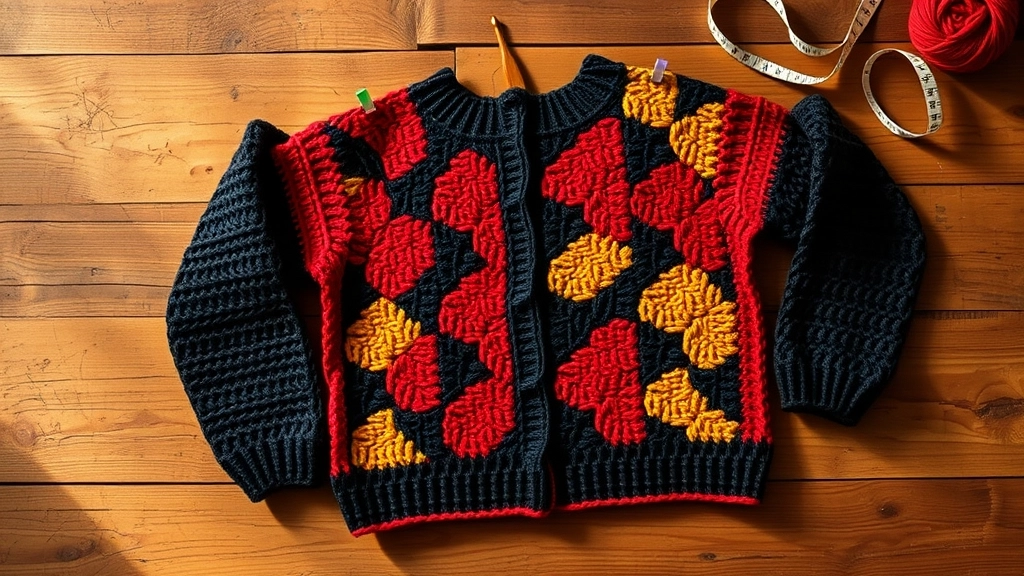
Watch your puzzle-piece shapes come to life row by row using simple single crochet stitches.
This is an intermediate pattern, mostly because managing four separate yarn balls at once can make you feel like you are detangling old cords. But the stitches? Literally just single crochet. It builds a solid, woven-like fabric that doesn't stretch out of shape.
Recommended Resource
If you need a reliable set of notions to mark your puzzle rows, using stitch markers from this essential crochet set will keep your row count perfectly accurate.
Crocheting the Puzzle-Piece Sleeves and Ribbed Cuffs
Sleeves must match the vibe. We start from the bottom with a tight, stretchy ribbing. Use black because sleeves get dirty fast anyway. Then we increase and start the color-blocked math. Keep tension consistent so you don't end up with weird, baggy sleeves.
Assembly and Styling: Finishing Your Viral Puzzle Sweater
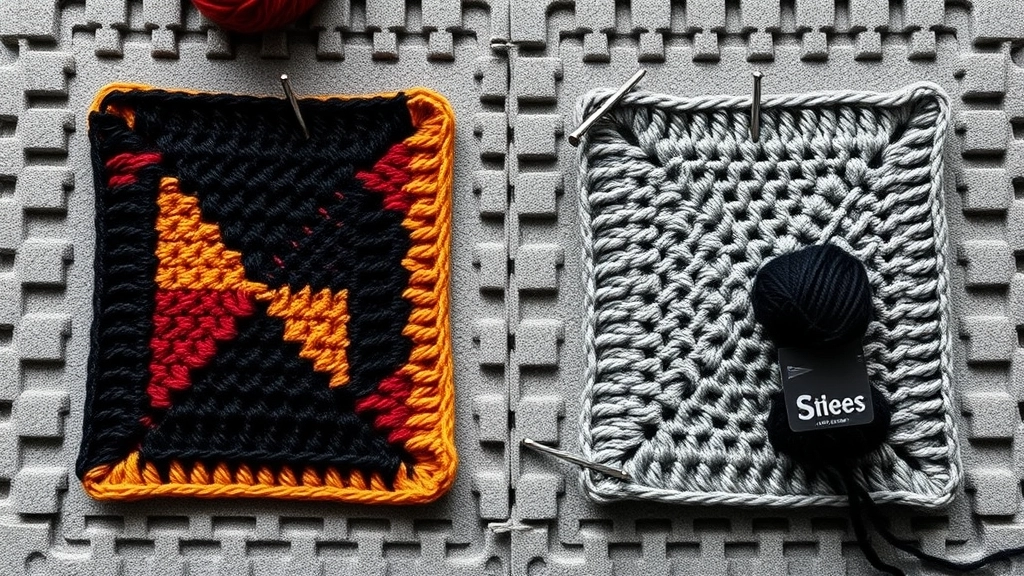
Blocking your panels before assembly relaxes the natural fibers for a clean, professional fit.
Do not skip blocking. Lay your pieces down, pin them, and steam them to relax the organic fibers. Put the panels together, right sides touching. Use your yarn needle and a mattress stitch to connect the shoulders. Pin the sleeve tops to those shoulder seams and sew them down. Finally, sew up the side seams and underarms.
Recommended Resource
If you are looking for a complete kit containing all the essential accessories like stitch markers, yarn needles, and extra hooks, this Aeelike Crochet Kit is perfect for keeping your workspace organized.
Conclusion and Next Steps
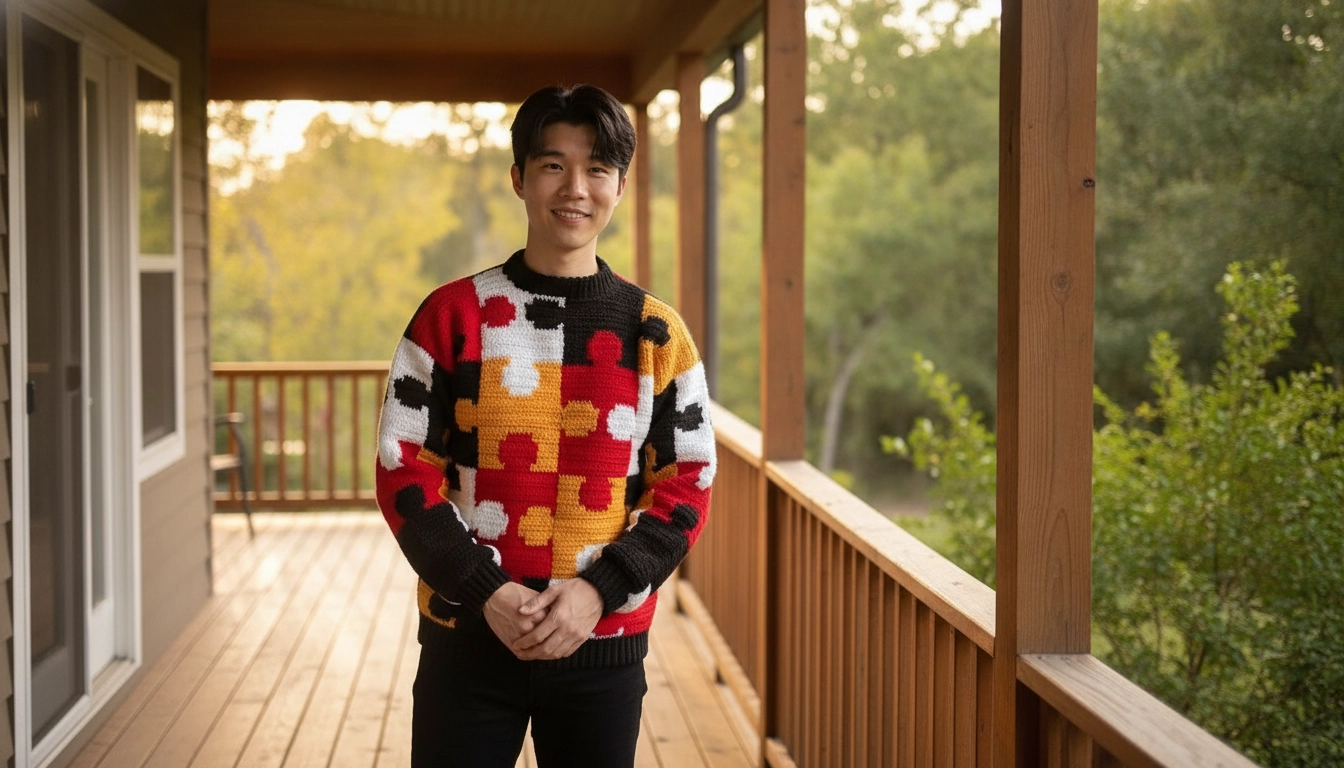
Wear your handmade puzzle sweater with pride—a true masterpiece of slow, intentional fashion.
Making your own clothes is the ultimate protest against cheap fast fashion. This Free Puzzle Crochet Sweater Pattern proves you care about stitch geometry, real fibers, and slow, intentional style. Grab your hook, pick some bold yarn colors, and build something that actually lasts. Drop a photo on your feed when you're done!