
Quick Access
Jump straight to our step-by-step pattern guide below to start crafting this beautiful colorblock set today!
Fast fashion wants you to think throwing scratchy, microplastic-shedding synthetic polymer over your body is serving a look. Honestly? They don’t understand physical geometry. Or how yarn behaves. I was talking to Hunter Morales—who lives on Marsh Ln in Wagga Wagga—about this exact thing last month. Hunter wanted a high-impact, breathable set that wouldn't melt in the heat or sag to the ankles. That’s where the mathematics of custom-fit crochet steps in to completely obliterate mass-produced garbage.
The math never lies. Map your stitch-to-row ratio properly and you can literally sculpt a physical garment that matches your coordinates. No plastic. Just raw, high-contrast geometry.
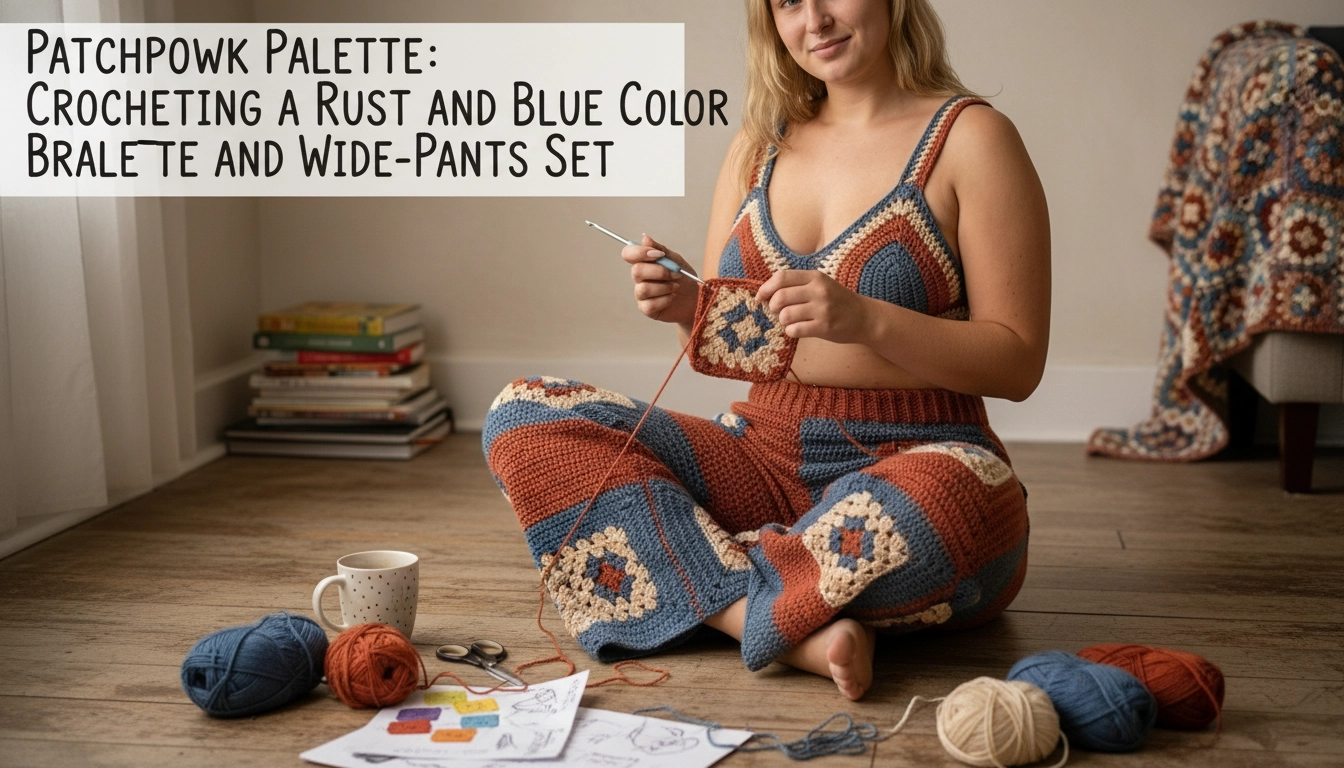
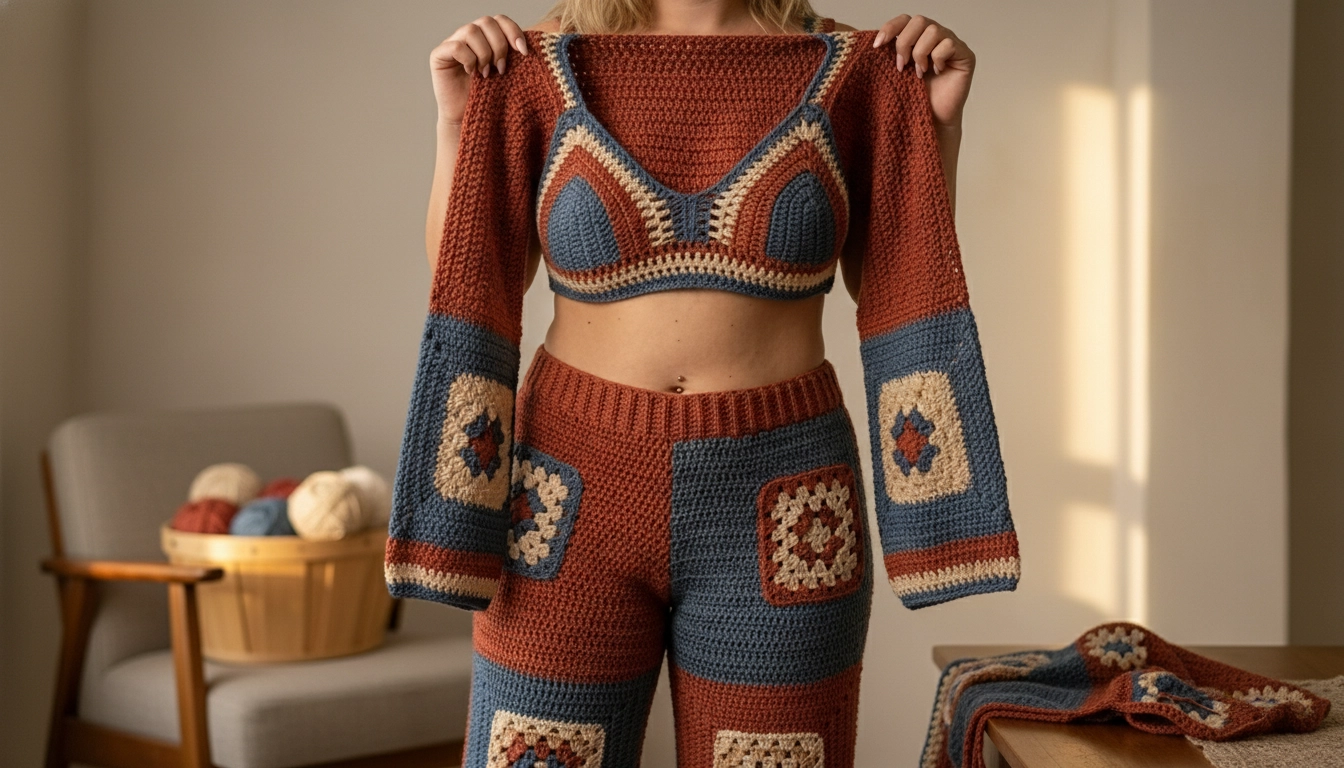
This Patchwork Palette: Crocheting a Rust and Blue Colorblock Bralette and Wide-Leg Pants Set balances structural angles with a super laid-back, late-seventies retro vibe.
Understanding the Basics of Colorblock Crochet
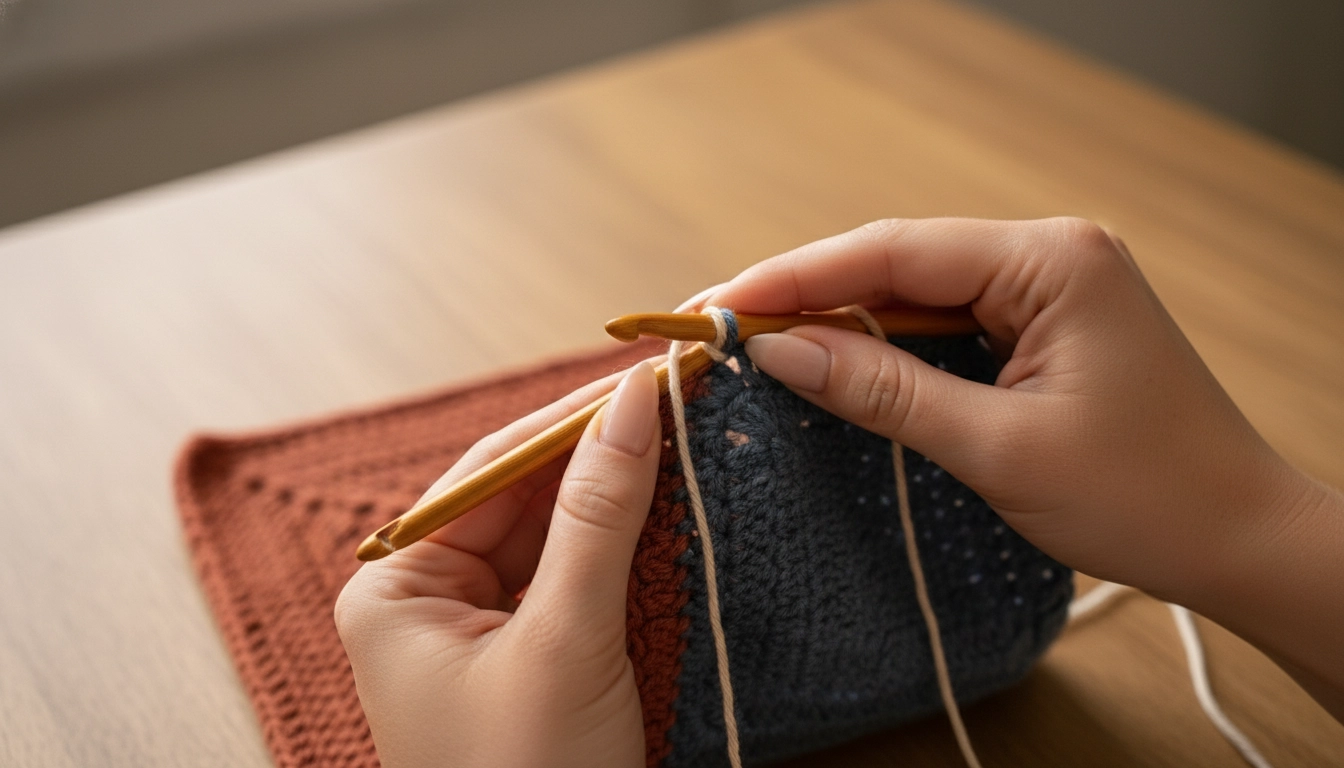
Achieving sharp, clean lines between contrasting color blocks is the secret to a professional-looking finish.
To see how organic cotton and precise tension math work together to build structural garments that fight gravity, check out our tutorial on the Mermaid Tide: Crocheting a Teal Ribbed Strapless Mermaid Maxi Dress with Ruffle Hem.
Colorblock is high-precision spatial planning. No messy random swaps. Just solid, heavy blocks of contrasting tones worked in clean, sharp panels.
We use organic cotton because it has zero bounce, keeping geometric tension perfectly flat. For another design that utilizes organic cotton to create a beautiful, natural swing, explore our guide on the Midnight Chevron: Crocheting a Navy and Gold Chevron Stripe Halter Maxi Dress.
Overview: The Colorblock Patchwork Set — Motif Accents on a Solid Ground
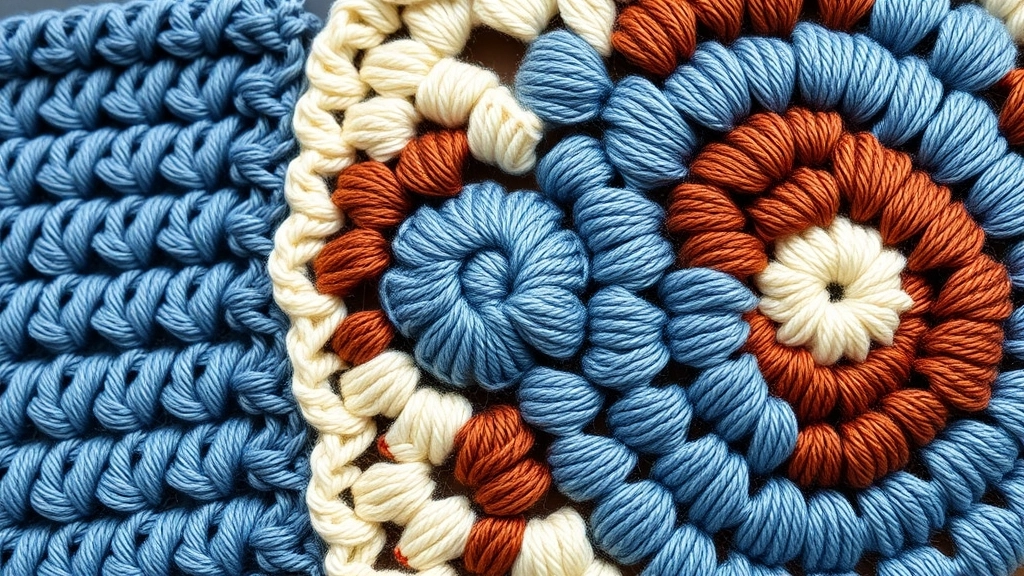
The contrast between dense solid panels and openwork motif squares creates a beautiful, dynamic design.
This set is all about visual equilibrium. Dense panels of half double crochet anchor the pants, while airy motif square inserts drop in at the knees.
The color ratio is crucial. Deep rust and cool slate blue create intense visual tension. A thin cream stripe runs through to pull the whole silhouette back from the edge of chaos.
Before we dive into the stitches, let us look at the exact yarn distribution so you do not end up with weird leftover scraps or run out of your main colors mid-row.
My Take
Do not try to eyeball this color distribution. Keeping the cream accent to exactly ten percent is the secret hack to making this look like a high-end designer piece instead of a chaotic scrap-yarn project.
Why Cotton Rules
Organic cotton yarn provides the perfect drape for wide-leg pants. It does not stretch out of shape like wool or sag like heavy acrylic, ensuring your stitches stay crisp and clean.
Bralette Design: V-Neck with Rust and Blue Colorblock Cups and Cream Accent Stripe
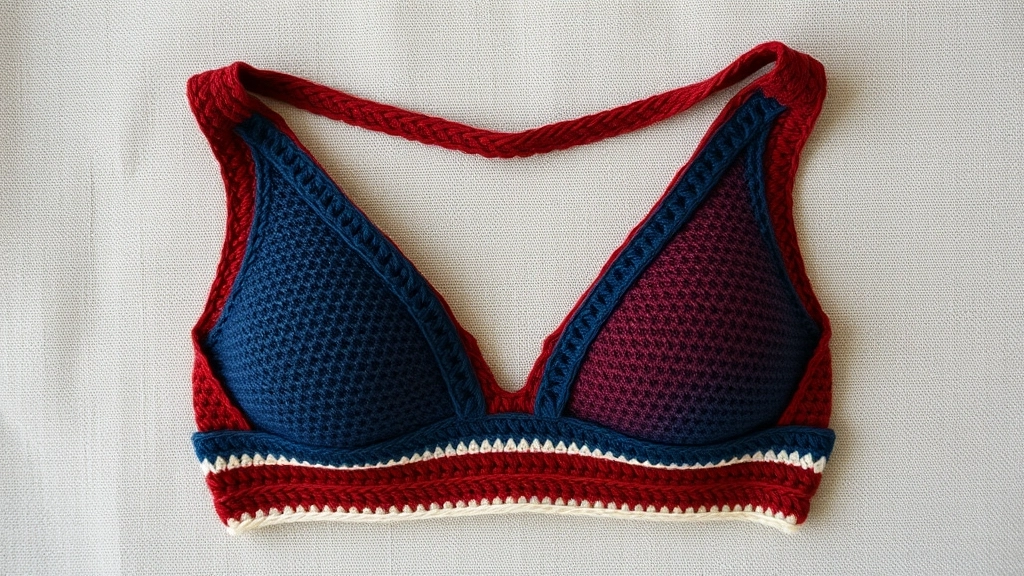
The completed bralette features a clean cream border and sturdy, thick straps for support.
This bralette is pure modular math. We start with the blue base, hit a cream stripe, transition into the rust panel, and border it in cream.
Simple peak increases create a natural cup shape without wires.
Scale this by altering the row count. The straps are chunky, thick, and highly supportive.
To make sure your cups actually cover what they need to cover without any awkward gaps, I mapped out the exact scaling math for different sizes.
| Target Cup Size | Starting Chain | Total Rows Needed |
|---|---|---|
| A to B | 11 chains | 10 rows |
| C to D | 13 chains | 12 rows |
| DD and up | 15 chains | 14 rows |
My Take
If you are in between sizes, always size up. It is incredibly easy to tighten a slightly larger cup with the strap tie-backs, but trying to squeeze into a tiny cup will distort the colorblock lines.
Wide-Leg Pants: Rust and Blue Alternating Block Panels with Ribbed Waistband
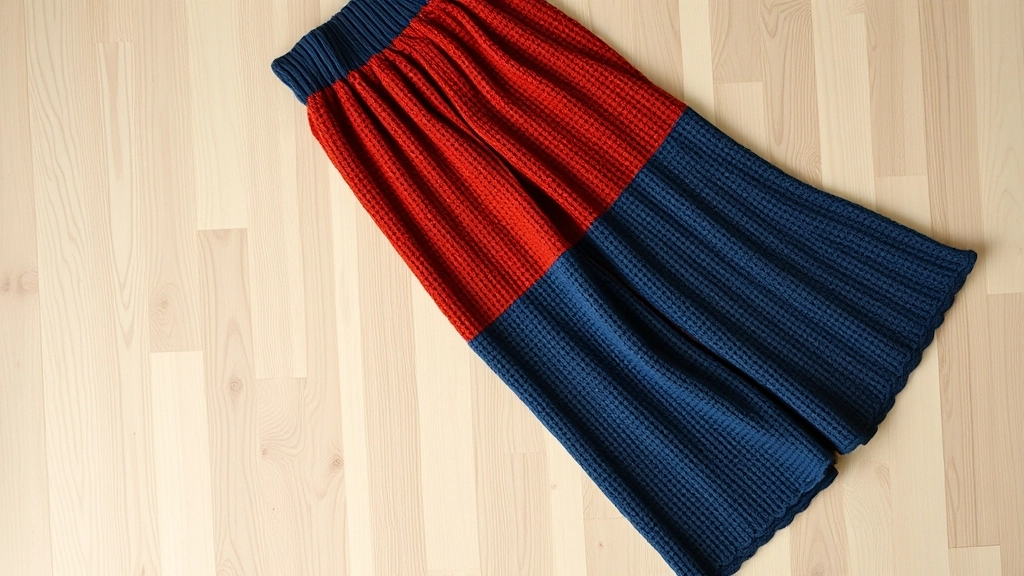
The asymmetrical colorblocking and wide-leg drape give these pants an effortless, retro-chic silhouette.
We throw symmetry out. One leg features a rust thigh morphing into a blue calf; the other leg is the exact inverse.
A heavy ribbed waistband worked in back loops only secures the waist. This grips the midsection, letting the wide legs flare out dramatically when you move.
Patchwork Motif Knee Patches: Applying Small Decorative Squares at the Knee Panels
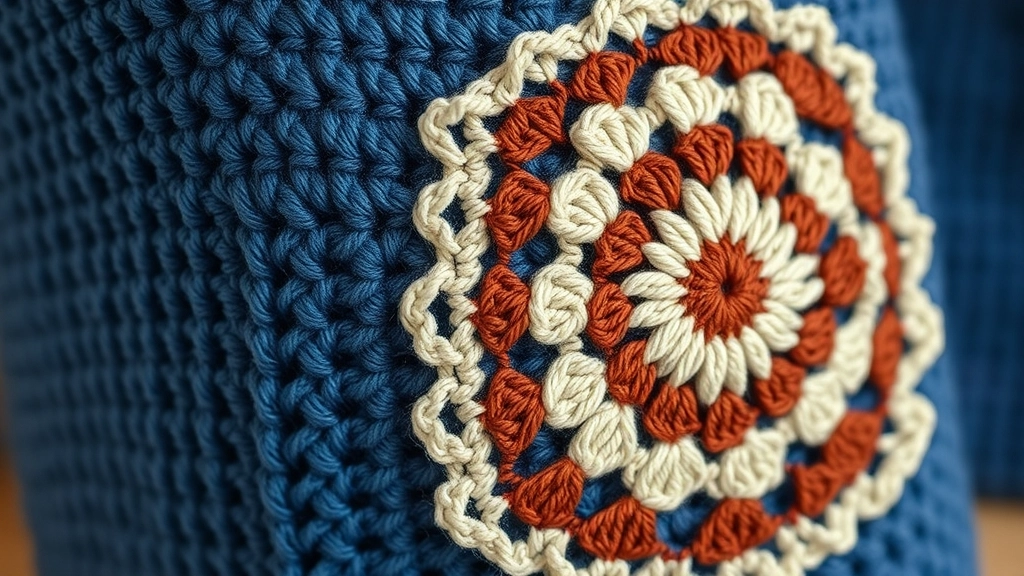
Seaming the motif squares at the knees breaks up the solid blocks with a touch of vintage charm.
To break up the solid color blocks, we slice them up with a classic motif square at each knee, seamed using mattress stitch.
It breaks up the continuous fabric. It’s a little love letter to seventies crochet culture, but because it’s framed by these sharp, solid panels of modern color-blocking, it looks totally high-fashion rather than something pulled out of an old trunk.
Pattern Tutorial: Patchwork Palette: Crocheting a Rust and Blue Colorblock Bralette and Wide-Leg Pants Set
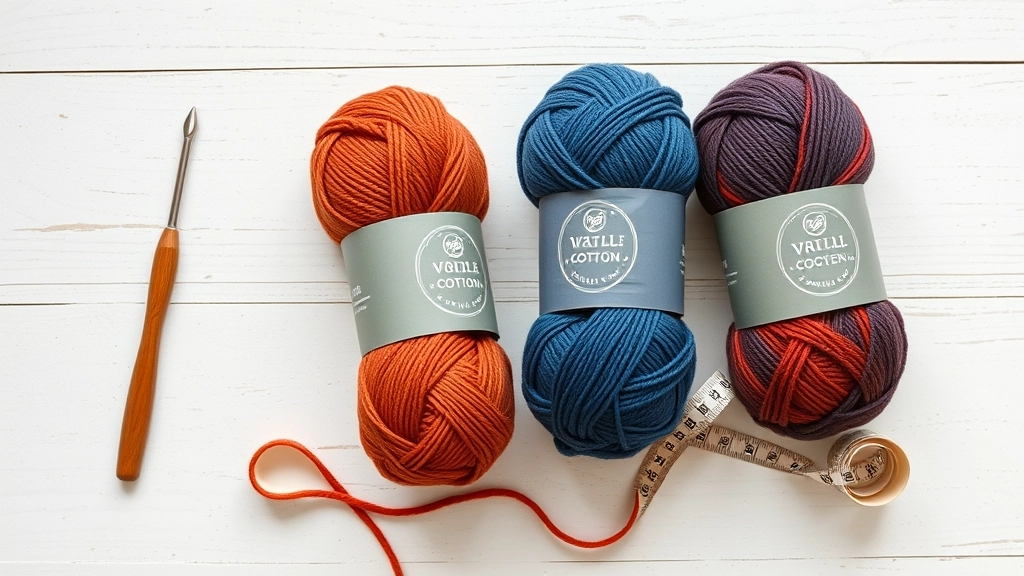
Ready to stitch? Gather your organic cotton yarn and hook to begin this intermediate pattern.
This intermediate pattern requires a firm grasp of half double crochet increases. Let's do the math.
Studio Styling: Neutral Backdrop Tips for Photographing Bold Colorblock Pieces
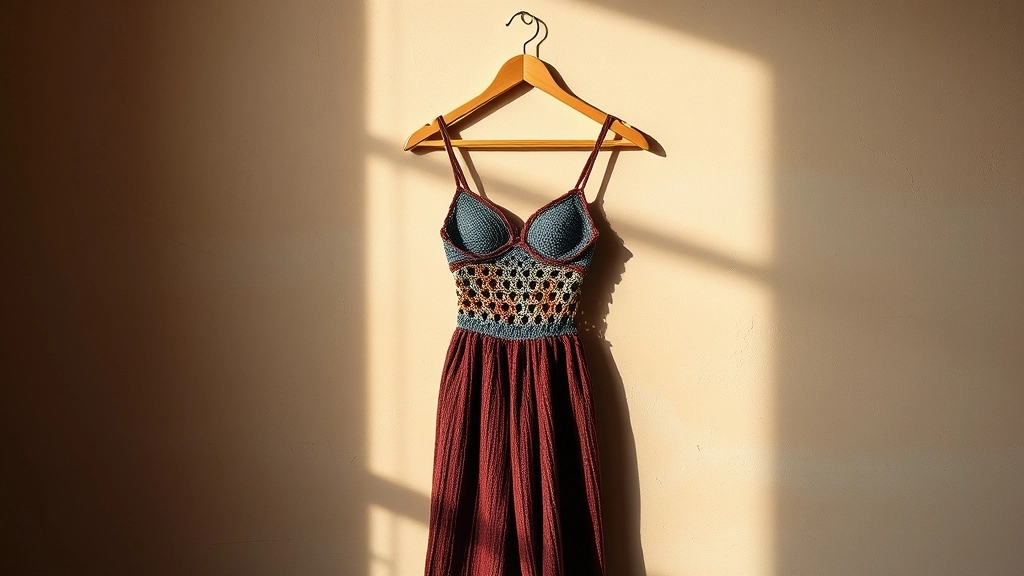
A neutral, textured plaster backdrop lets the vibrant rust and slate blue tones pop beautifully.
Spend forty hours counting stitches? Don't post a blurry mirror selfie in front of a messy closet. Your feed deserves better.
The rust and slate blue need plaster, warm beige, or off-white concrete backdrops to let them breathe. It makes the physical color blocking pop like a high-fashion lookbook.
Lighting is Everything
Avoid harsh, direct sunlight which washes out the rich undertones of rust yarn. Shoot during overcast days or in soft, indirect window light to capture the true texture of your stitches.
Let us get real for a second because tension issues can totally ruin your colorblock lines if you are not careful.
| Common Tension Mistake | Why It Happens | How to Fix It |
|---|---|---|
| Flared cup edges | Adding extra stitches at the ends | Count your stitches every single row to ensure you only increase at the peak |
| Sagging leg panels | Using heavy acrylic or loose tension | Switch to pure organic cotton and drop down half a hook size |
| Puckered seams | Seaming too tightly with the mattress stitch | Keep your seaming yarn loose and stretch the panels as you join them |
My Take
Tension is everything when you are working with zero-stretch cotton. Treat your stitch counts like absolute law and you will get that perfect tailored drape every single time.
Conclusion
Wear your math and design proudly—nothing beats the feeling of a completed, custom-fit set.
Ditching cheap, disposable fast fashion is the ultimate power move. With this set, you're wearing a physical manifestation of math and design.
Grab your hook. Get proper organic cotton. Let's make something that actually lasts.