
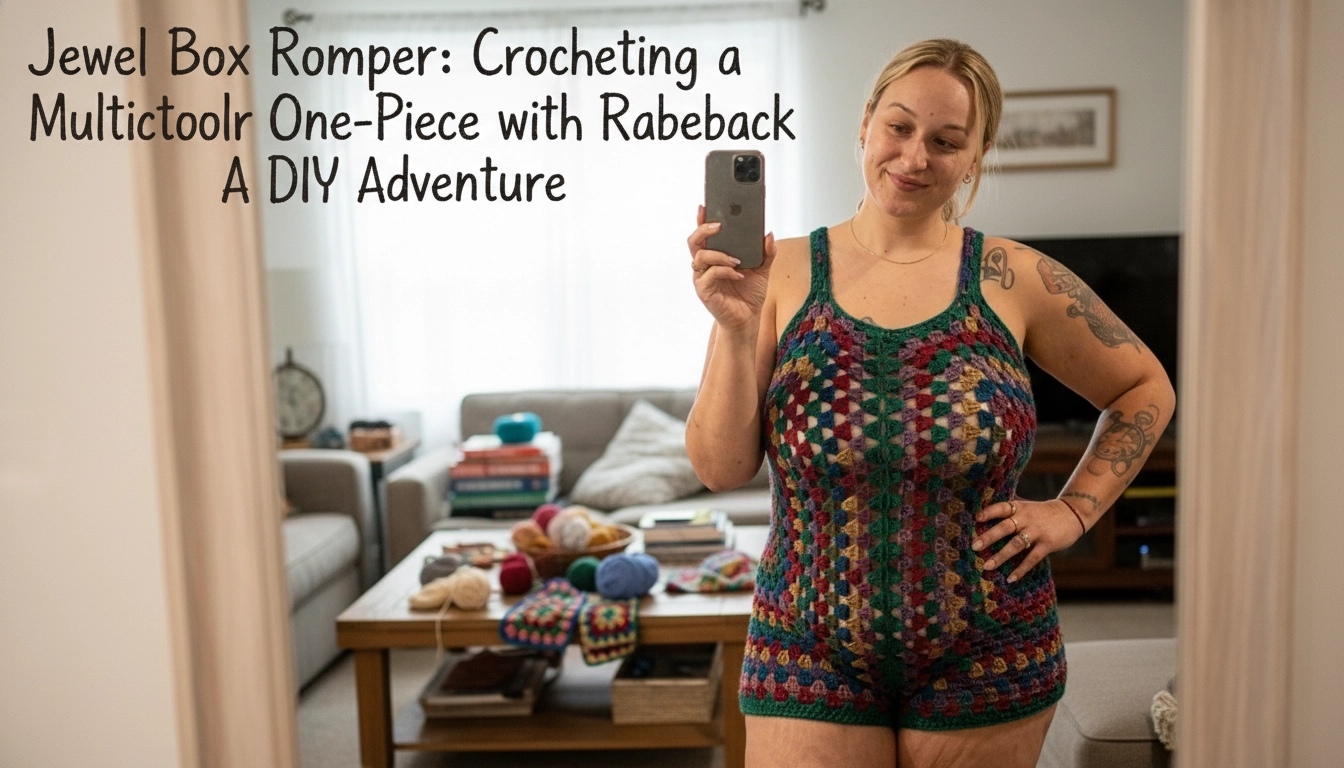
Your body isn't a flat piece of paper, so why wear clothes cut like cardboard? I was staring at cheap, synthetic fast-fashion rompers—literally melting under the iron, zero shape, trash after one wash. It makes me want to scream. My friend Carole Garrett texted me from Bozeman because she wanted a summer piece that didn't sag like a wet diaper by 2 PM. I told her it's yarn physics. Swap out plastic acrylic for organic cotton, use some actual color-block mathematics, and you get a masterpiece that fits. That's why I engineered this specific piece. It's high-contrast geometry mapping perfectly to your curves.
Quick Access
Skip straight to the pattern instructions below if you already have your materials ready, or read on to master the color theory and structural design of this gorgeous piece.
Understanding the Basics of the Jewel Box Romper
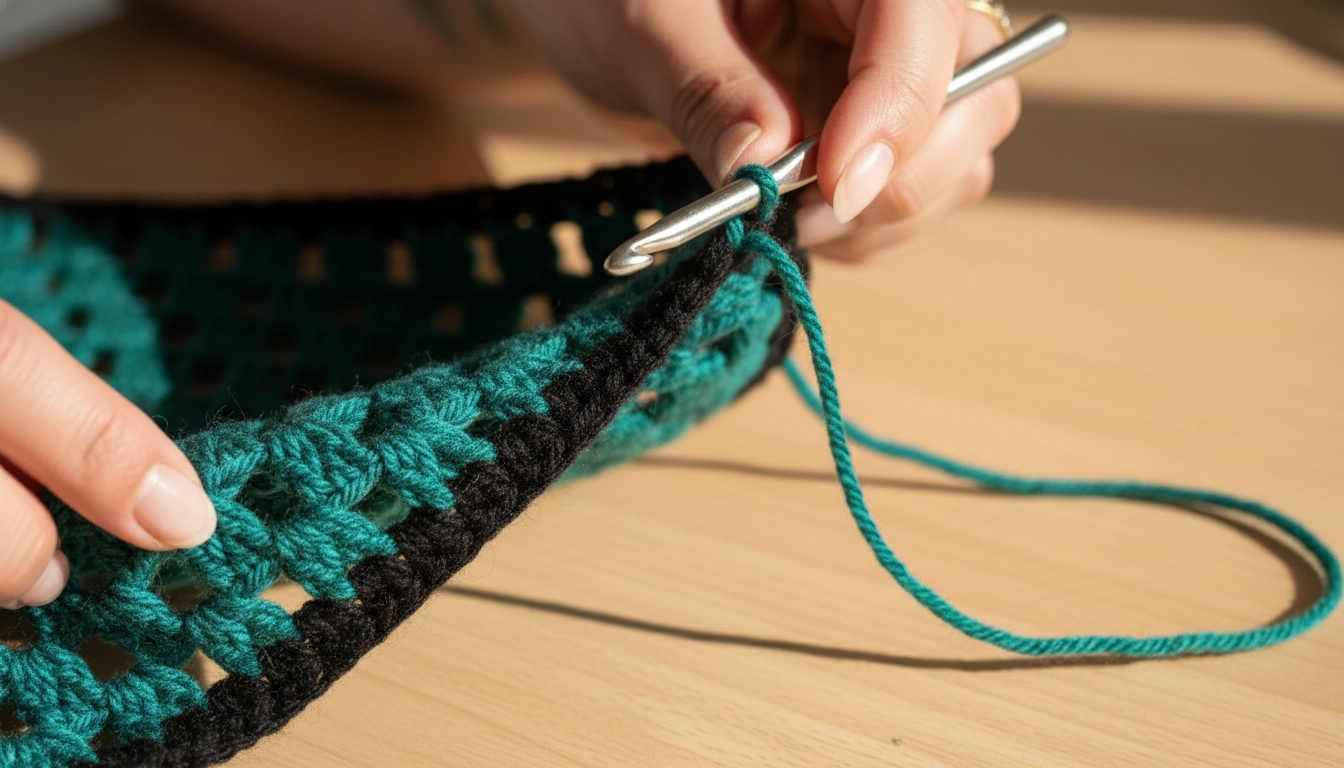
The join-as-you-go method creates a seamless, breathable fabric that wraps naturally around your curves.
Let's get something straight: this is a three-dimensional project, not a flat blanket. We are using a repeating cluster of three double crochets, but we're building it as a continuous, join-as-you-go grid that wraps around you. No sewing fifty separate motifs together like some tedious puzzle. It breathes. It moves. The open spaces give you draft, but the clusters give you coverage. It’s like wearable stained glass.
The Science of Stretch
Unlike synthetic fibers, organic cotton yarn has minimal natural elasticity. We compensate for this by using the open mesh structure of the granny stitch, which naturally expands and contracts to hug your curves without sagging.
The Granny Square Romper — All-Over Color in a Compact One-Piece
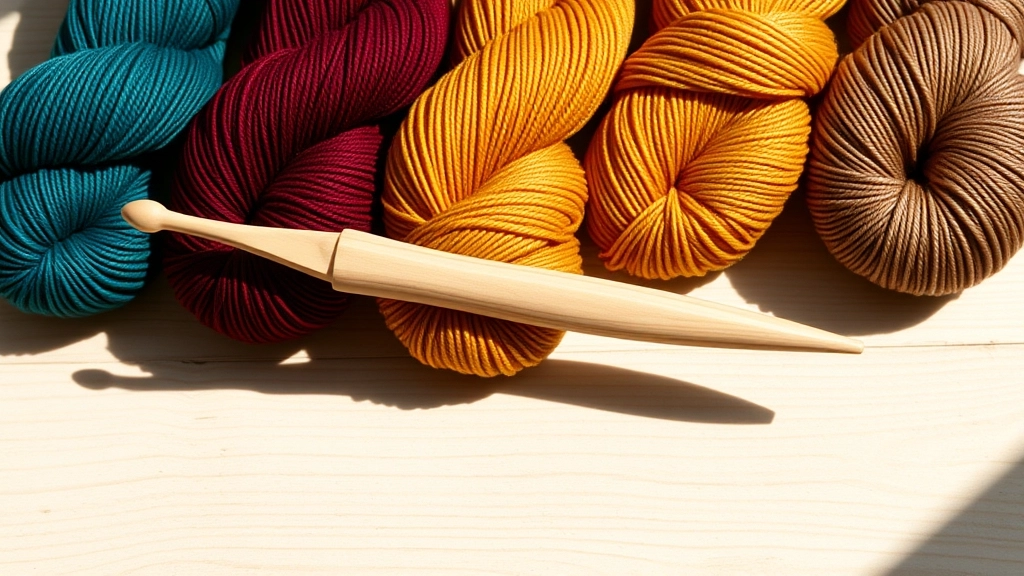
Choosing high-quality organic cotton yarn ensures your romper holds its shape and tension without sagging.
A lot of people think a knit one-piece is going to drag down. It won't. Not if you construct it right. By combining the top and bottom into a unified tube, we distribute the weight across your shoulders instead of hanging it off your hips. If you prefer a separate bottom piece rather than a full one-piece romper, you can apply similar color-blocking principles to our Earthy Stripes: Crocheting Multi-Tone Earth Stripe Booty Shorts with Scalloped Legs for a form-fitting, curve-hugging alternative. Organic cotton is the secret weapon here. It doesn't stretch out and stay stretched like cheap nylon does. It stays crisp. It holds the tension. Plus, it looks insanely premium on camera.
I want to show you exactly how different fibers perform under the unique tension of a one-piece garment, because picking the wrong yarn will ruin your stitch definition.
| Fiber Type | Structural Integrity | Breathability | The Mary Benjamin Verdict |
|---|---|---|---|
| Organic Cotton | High tension hold, zero long-term sag | Maximum draft, stays cool | The absolute gold standard for wearable geometry |
| Acrylic | Stretches out of shape after one wear | Traps heat, feels like wearing plastic | Avoid unless you want a sad, melting romper |
| Bamboo Blend | Super soft but heavy drape | Decent draft, cool to touch | Great for lounge, but expect some length stretch |
My Take
Seriously, do not cheap out on the yarn. Organic cotton has that crisp stitch definition that makes your granny clusters look like high-end designer knitwear instead of a floppy craft fair reject.
Square Color Palette: Teal, Burgundy, Purple, Mustard, Blue, and Green on Black
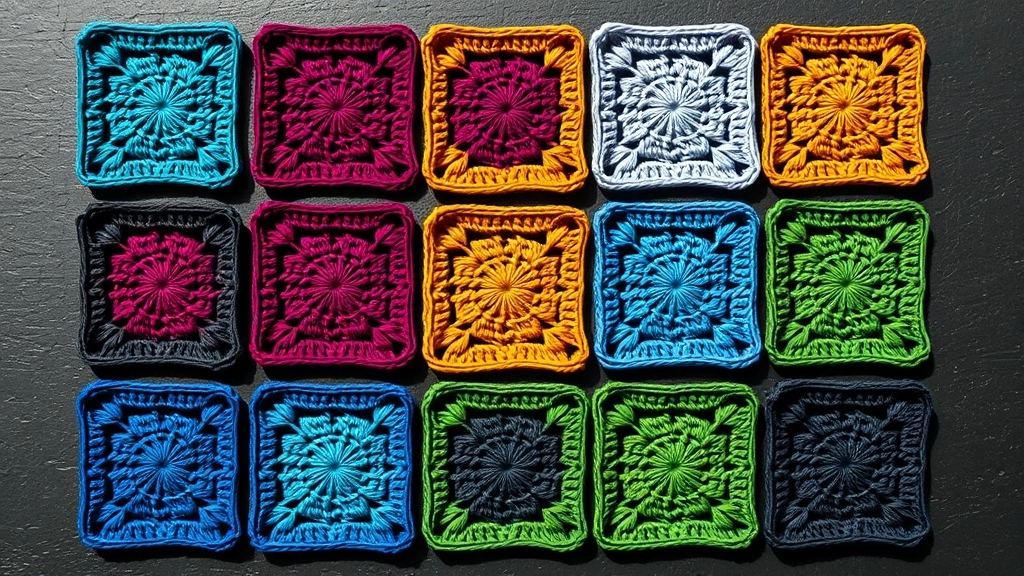
Solid black rows serve as the visual anchor, making each jewel tone pop dramatically like stained glass.
Color blocking isn't random. It’s math. To get that jewel-box effect that absolutely pops on your feed, we are nesting rich teal, deep burgundy, intense purple, warm mustard, royal blue, and forest green. But the real hack? Framing every single color sequence with solid black rows. The black acts like the lead came in a stained-glass window. It anchors the high-contrast tones, making them look three times as bright. It’s pure visual drama.
To make sure your romper looks like a high-fashion stained-glass window and not a chaotic scrap-yarn explosion, here is how we calculate the color layout.
| Color Tone | Design Role | Visual Impact |
|---|---|---|
| Teal and Burgundy | Core Mid-Tones | Establishes the rich, moody foundation of the palette |
| Purple and Mustard | High-Contrast Accents | Creates pop and draws the eye across your curves |
| Blue and Green | Cool Anchors | Balances the warm tones and adds deep, organic dimension |
| Solid Black | Framing Border | Acts like lead came in stained glass, making colors explode |
My Take
The black rows are your best friend here. If you skip the black borders, the colors will bleed together visually and lose that sharp, geometric edge that makes this piece so photogenic.
Racerback Construction: Shaping the Back Opening for Comfort and Style
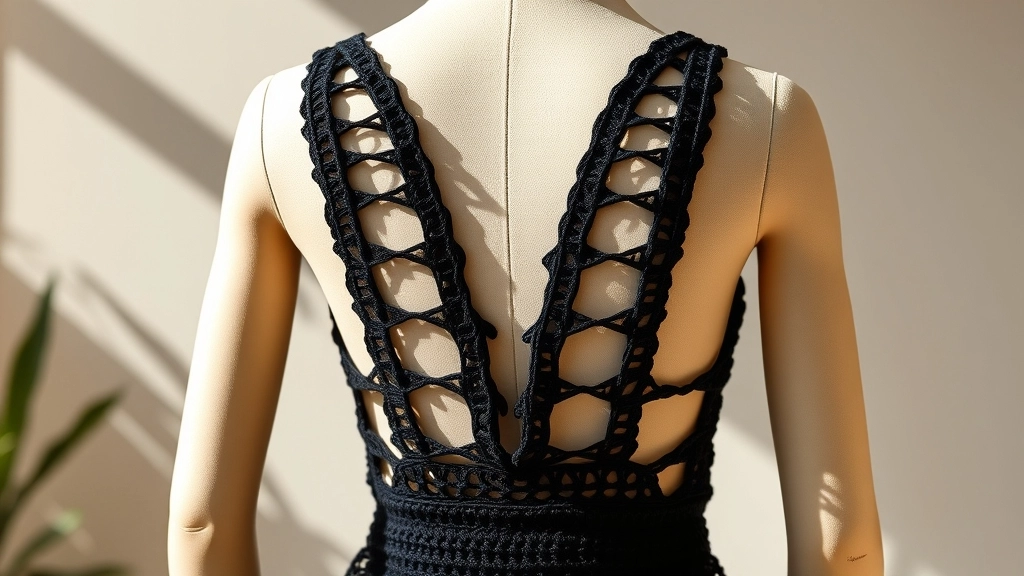
The tapered racerback construction provides full shoulder mobility while keeping the bodice securely in place.
The back is where things get highly technical. Nobody wants straps that slide off when you bend over. By tapering the panels inward toward the spine, we build a racerback that locks the garment to your frame. We decrease the clusters systematically along the armholes to create a clean, diagonal line. It's functional architecture. It gives your shoulders full mobility while keeping the bodice completely secure.
Green Trim Edging: Finishing All Openings with a Coordinating Border Row
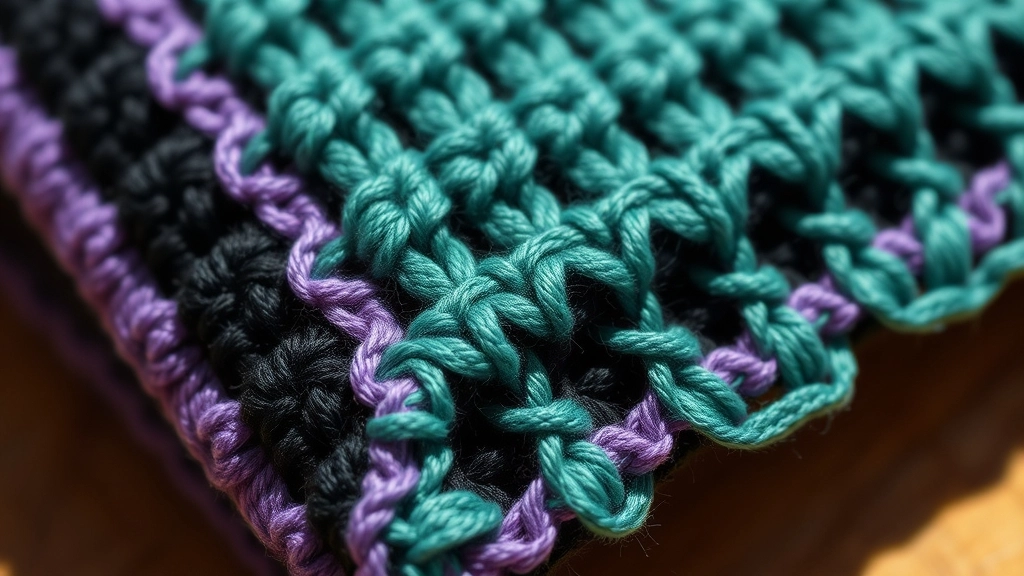
A tight green border compresses the raw edges, locking the shape so it never warps over time.
Never leave raw edges. A raw edge is a structural failure waiting to happen. We finish every single opening—the legs, the neck, the armholes—with a tight, forest green border. Why green? It pulls the whole wild palette together. Drop down a hook size here. Using a smaller hook for the trim compresses the stitches, locking the edges so they never warp or blow out over time.
Step-by-Step Guide to the Jewel Box Romper: Crocheting a Multicolor Granny Square One-Piece with Racerback
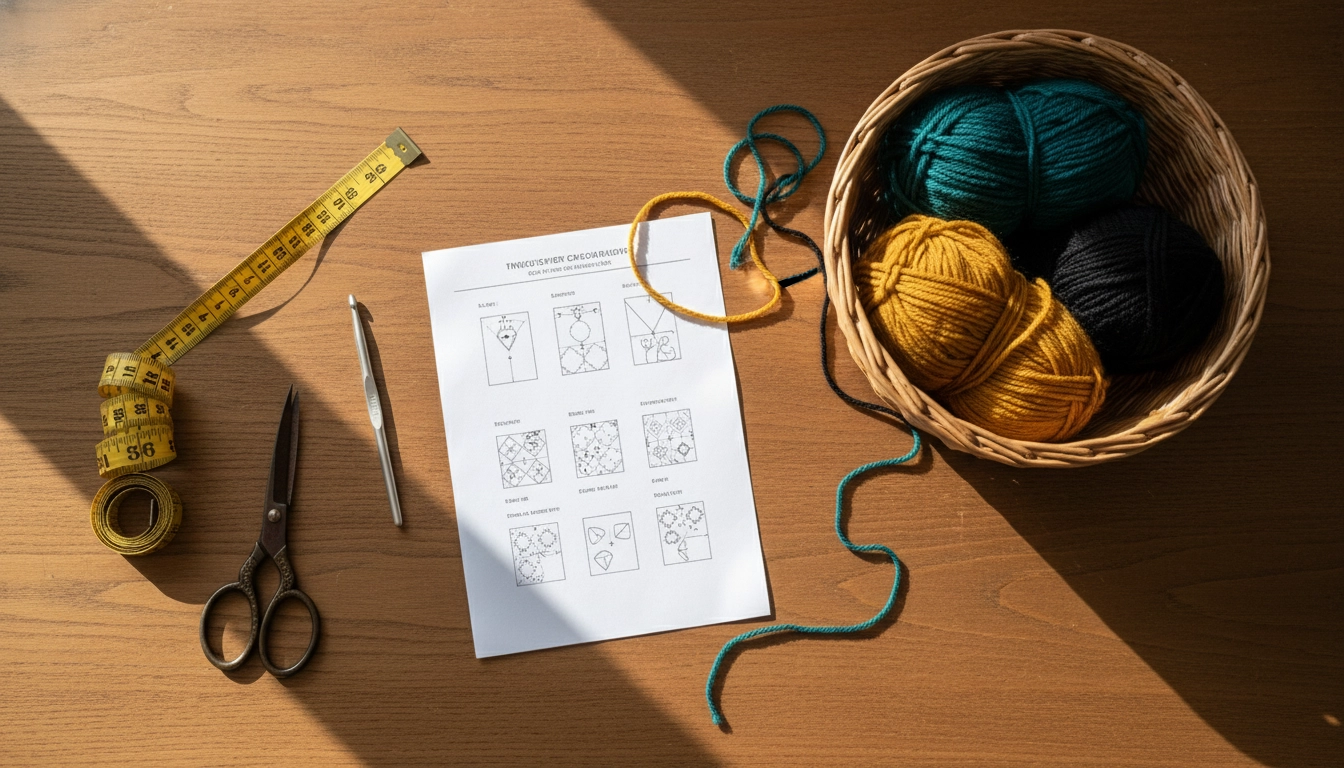
Gather your materials and set up your workspace before diving into the intermediate pattern instructions.
This intermediate pattern is designed for crocheters who want to elevate their garment-making skills.
Tension Check
Keep your chain spaces consistent. Loose chains will cause the romper to sag over time, especially around the seat and hips.
Mirror Selfie Fit Check: Adjusting Square Count for the Right Length and Coverage
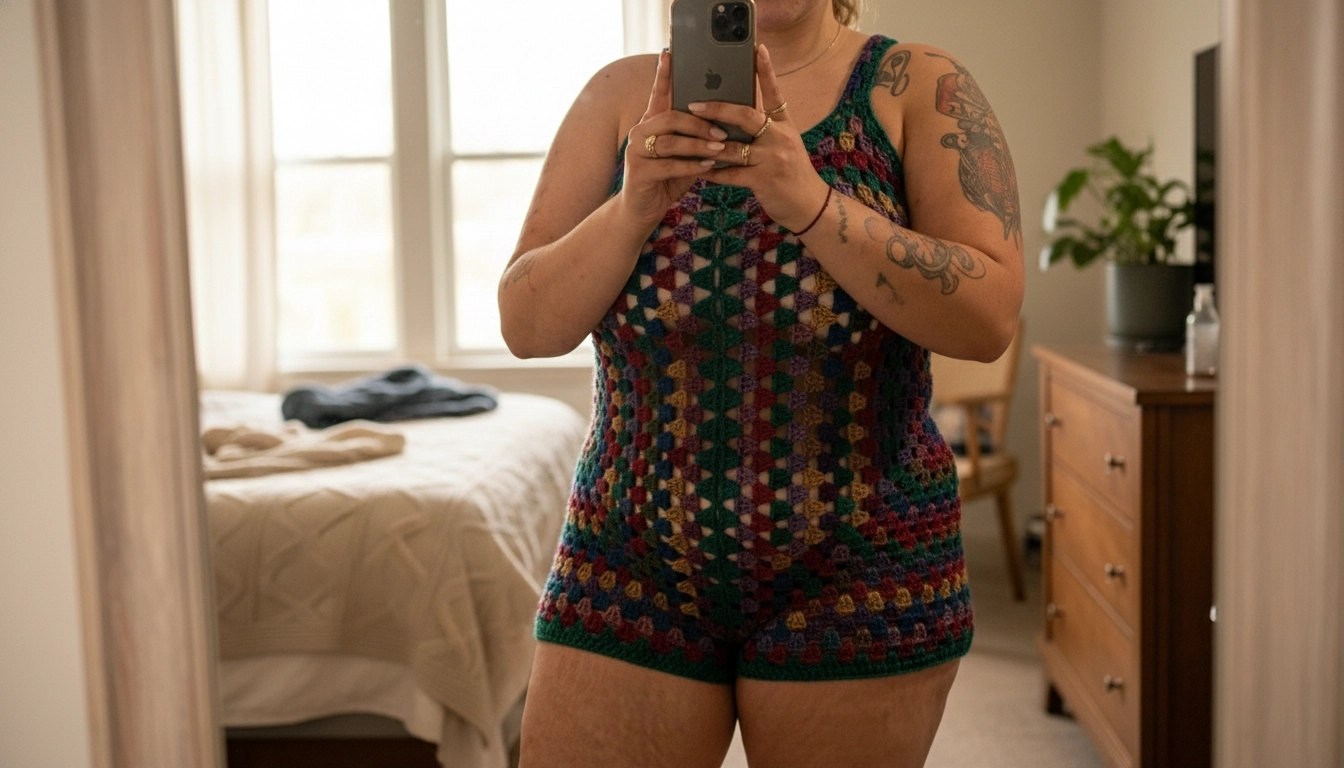
Take a quick mirror selfie during construction to diagnose and adjust the fit of your custom romper.
Do not weave in your tails yet! Seriously. Put the thing on and go look in the mirror. Check the rise. If your torso is longer, just add another round of cluster stitch to the waist before you divide for the legs. Take a quick photo. If you see gaping around the arms, adjust your strap tension. It’s your custom fit—make it perfect.
Before you lock those ends in, let's do a quick diagnostic check in front of the glass to make sure this piece hugs you exactly where it should.
| Fit Issue | Probable Cause | Quick Fix |
|---|---|---|
| Gap around the underarms | Strap tension is too loose | Undo the shoulder slip stitches, pull tighter, and re-secure |
| Romper pulling up too high | Torso section is too short | Add two to three more rounds of clusters before dividing the legs |
| Leg openings flare out | Edge stitch tension is lax | Drop down a full hook size for your green trim border rounds |
My Take
Bodies are dynamic, not static. Use this troubleshooting matrix to customize the fit. It is much easier to frog two rows now than to stare at an awkward fit in every photo you take.
Conclusion
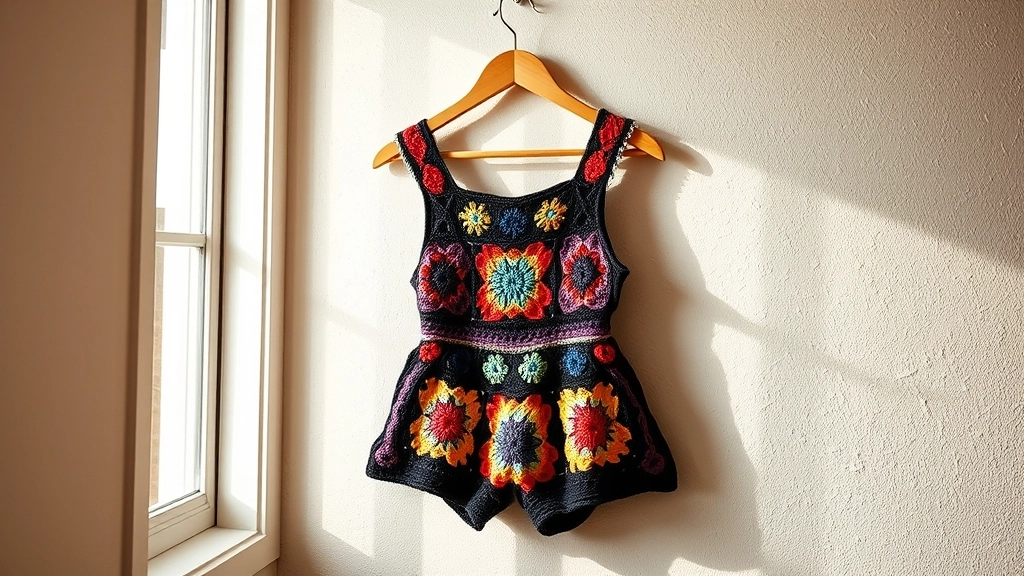
Your completed Jewel Box Romper is a durable, custom-fit statement piece that stands the test of time.
Ditch the fast-fashion garbage. When you build something stitch by stitch, you own your style. This romper isn't just a project; it's a statement against cheap, disposable clothes. It's durable, it fits your actual body, and it looks incredible. Hit me up online and show me your colorways.